What is a Rollator? A Complete Guide to Choosing and Using Your Mobility Aid
Feeling a bit unsteady on your feet? Thinking about getting a mobility aid? You've come to the right place. This guide will walk you through (get it?) everything you need to know about rollators, those walkers with wheels that you see everywhere.
So, You're Thinking About a Rollator?
Deciding you need a bit of help getting around is a big step. Maybe walking feels wobbly, getting up from a chair is a chore, or you just don't have the stamina you used to. These things happen.
Getting a rollator is a smart move toward staying safe and independent. It provides the stability you need to move with confidence. This guide will help you understand what a rollator is, how to pick one, and how to use it without any drama.
What is a Rollator, Anyway?
A rollator is a frame with three or four wheels, handlebars, and brakes. It gives you support while you walk, but you can move at a normal pace without having to lift it up every time you take a step.
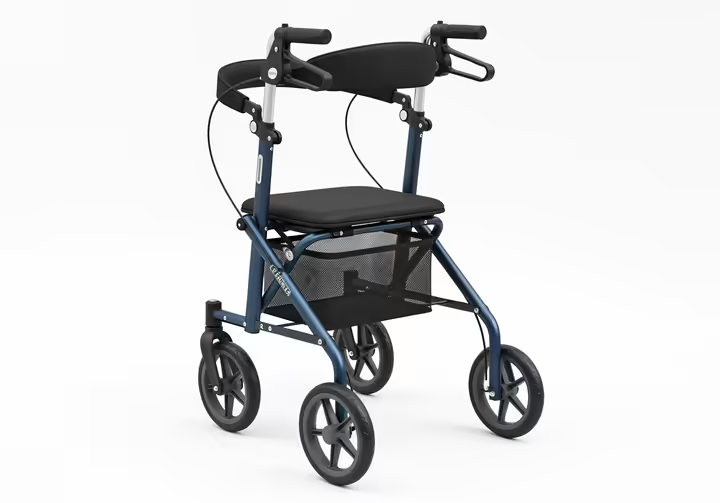
A standard four-wheel rollator, ready for adventure (or at least a trip to the shops).
The Parts
The main parts work together to keep you moving. The frame is the skeleton, usually made of lightweight aluminum so it's easy to push. For extra support, some frames are made of stronger steel.
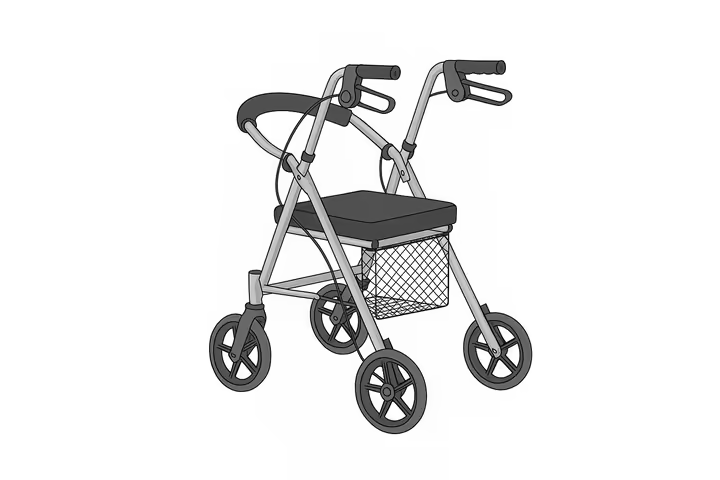
The wheels are what make it a "rollator." They let you push the device smoothly. The front wheels usually swivel, which makes steering much easier.
You control the whole thing with the handgrips and brakes . The brakes are key, they help you control your speed on slopes and lock the wheels when you need to stop. Most four-wheel rollators also have a built-in seat , perfect for a quick rest. And for your stuff, there's usually a storage basket or bag under the seat.
Rollator vs. Walker: The Showdown
These things are not the same. Picking the right one is important for your safety, it's all about balancing stability with ease of movement.
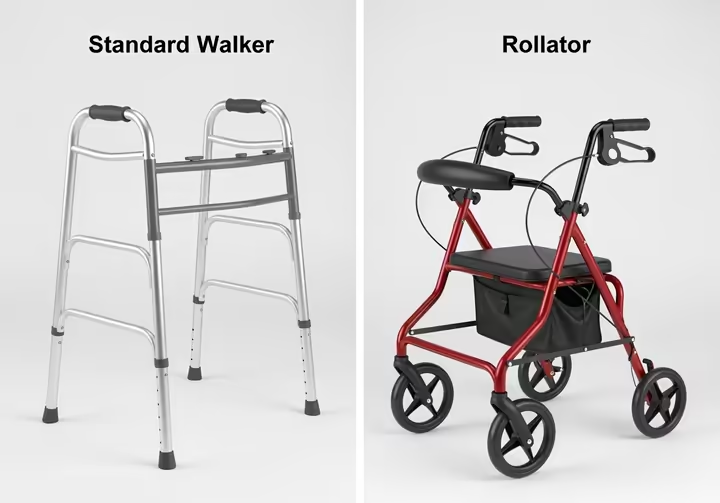
Standard Walker
This is your basic, no-frills walker, sometimes called a Zimmer frame. It has four legs with rubber tips, no wheels. You need enough arm strength to lift it, put it down, and step into it.
It offers the most stability. This makes it a good choice if you need to put a lot of weight on it, like when you're recovering from hip surgery.
Rolling Walker
This one is a hybrid. It has wheels on the two front legs and rubber tips on the back two. You don't have to lift it completely, you just push it forward.
The back legs create some drag, so it won't run away from you. It’s for people who need a lot of support but don’t have the strength to lift a standard walker all the time.
Rollator
With three or four wheels, a rollator is built for moving. It's best for people who have decent balance but need help with endurance or stability over longer walks. A rollator is not meant to support your full body weight, even with the brakes locked.
A Rollator for Every Occasion
Rollators come in a few different flavors, designed for different people and places.
Three-Wheel Rollators
These are super nimble. With one wheel in front, they have a tight turning radius, which is great for moving around indoors in narrow hallways or crowded stores. The trade-off? They're less stable than four-wheelers and almost never have a seat.
Four-Wheel Rollators
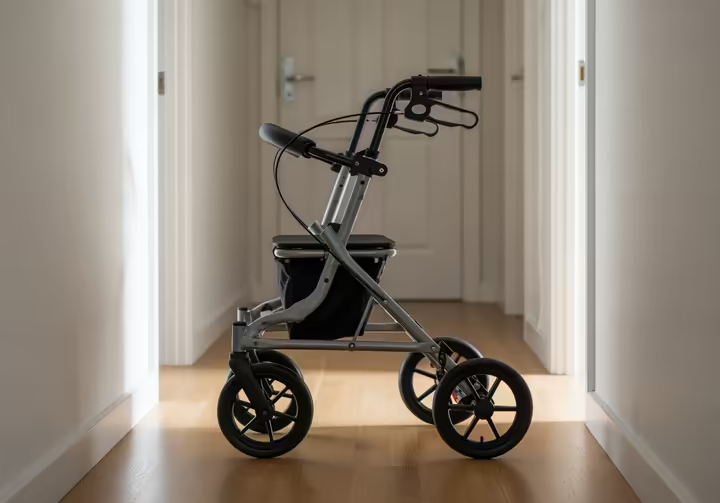
This is the classic model. The four wheels give it a stable base, and it almost always comes with a seat and a basket. It's a versatile choice for both indoor and outdoor use.
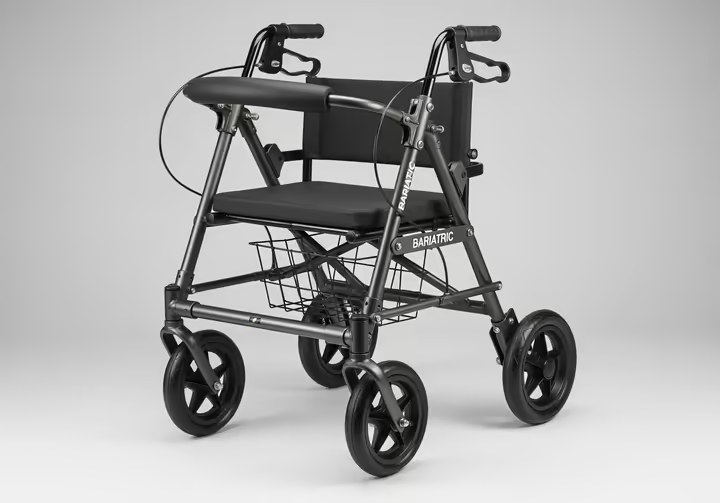
Heavy-Duty (Bariatric) Rollators
Built tough. These have reinforced steel frames, wider seats, and stronger wheels to support higher weights (often up to 700 pounds). They provide the needed space and durability for larger users.
Upright Walkers
If you find yourself hunching over a normal rollator, this might be for you. Instead of low grips, it has padded forearm supports that help you stand up straight. This can be a lifesaver for your back, neck, and shoulders.

All-Terrain Rollators
For the adventurous. These have big, beefy wheels (sometimes air-filled) that can handle grass, gravel, and cobblestones without getting stuck. Perfect for gardening or walks in the park.
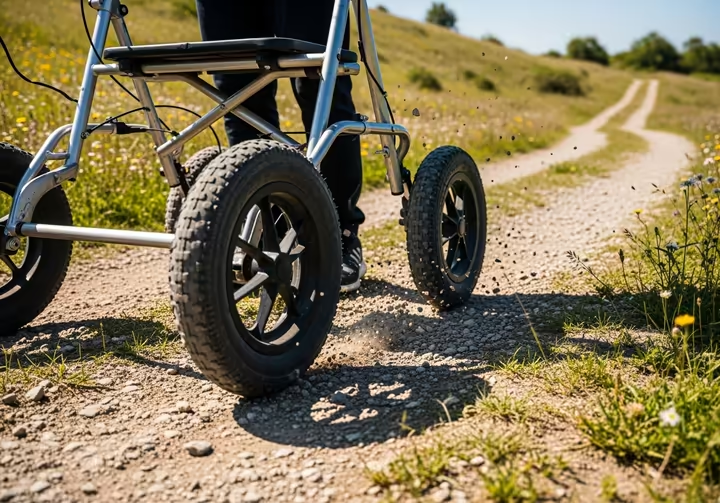
An all-terrain rollator with big wheels, basically the monster truck of the walker world.
Choosing the Right One
A fancy rollator that doesn't fit you is more dangerous than a basic one that does. Getting the fit right is the most important step.
Handle Height
This is critical. Stand up straight in your everyday shoes with your arms relaxed at your sides. The handgrips should be at the same height as the crease in your wrist.
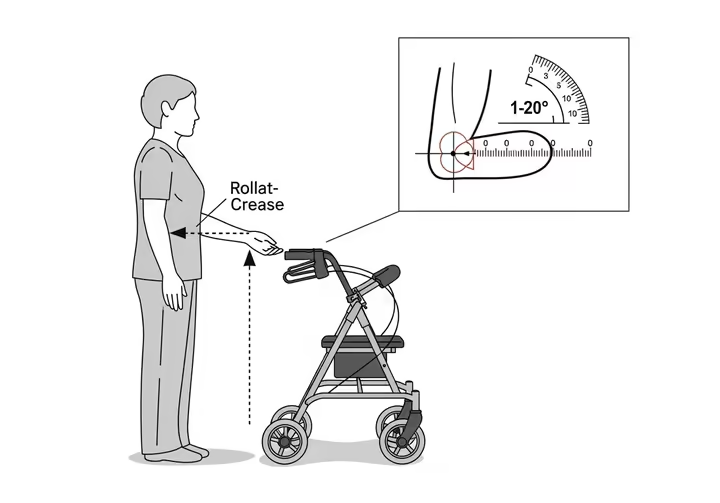
When you put your hands on the grips, your elbows should have a slight, comfortable bend. Too high, and your shoulders will ache. Too low, and you'll hunch over, which is bad for your back and your balance.
Seat Height
When you're sitting, your feet should be flat on the floor with your knees bent at about a 90-degree angle. This makes it easier, and safer, to sit down and stand back up.
Brakes
Most rollators use loop brakes, like on a bicycle. Squeeze the lever to slow down, and push it down to lock the wheels before you sit. Some have push-down brakes that engage when you put pressure on the handles, which is helpful for people with arthritis or a weak grip.
Wheels
Size matters. Small, solid wheels (6-7 inches) are fine for smooth indoor floors. For outside, you'll want larger wheels (8 inches or more) to roll over cracks and bumps without stopping dead.
Weight and Folding
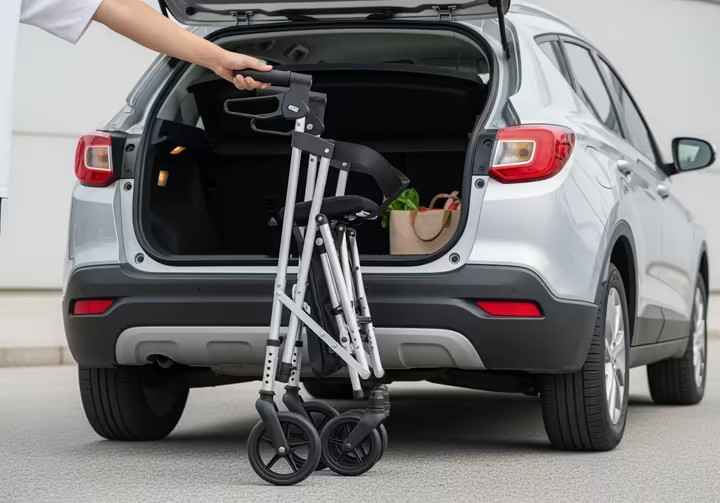
Think about who will be lifting this into a car or carrying it up stairs. Lightweight models can be around 11 pounds, while heavy-duty ones can be over 25. Also, check how it folds, some fold flat while others become a more compact, standing package.
How to Use It Without Falling Over
Using a rollator is a new skill. Practice a bit at home before you head out into the wild.
Walking and Sitting Safely
Always walk inside the frame, not behind it pushing it way out in front. Your body should be between the rear wheels. This keeps your center of gravity supported.
Before you even think about sitting down, ALWAYS lock the brakes. No, really. Always. Back up until your legs touch the seat, then use the handgrips for support as you sit. To stand up, push up from the seat, don't pull the rollator toward you.
Keeping It in Shape
Give your rollator a quick check-up now and then. Make sure the brakes are working well and the cables look good. Tighten any loose bolts or screws, and check that the wheels are clean and spin freely.
It's More Than Just a Frame
A rollator does more than just help you walk, it can change your daily life. The biggest benefit is often a reduction in the fear of falling. That fear can make you stay home and stop doing things you enjoy.

With a stable rollator, you gain the confidence to get out more. This means more physical activity, which is great for your health, and more social connection, which is great for your mood. It's a tool that helps you stay independent and involved in your own life.
Common Questions (and Good Answers)
It's normal to have questions. Here are some of the big ones.
How much do they cost?
Prices vary a lot. A basic four-wheel model might be $70 to $250. Fancier versions, like ultralight or all-terrain rollators, can cost over $600.
Will Medicare pay for it?
Sometimes. Medicare Part B may cover a "rolling walker" if your doctor says it's medically necessary for use inside your home . The focus needs to be on helping you with daily activities at home, like getting from the bedroom to the kitchen.
You'll need a prescription, and you must get it from a supplier that accepts Medicare. After your deductible, Medicare usually pays 80%, and you pay the other 20%.
What if I feel weird using one?
That’s a common feeling, but try to reframe it. A rollator isn't a sign of weakness, it's a smart tool you're using to stay safe and independent. Think of it like glasses, if you can't see well, you wear glasses. If you're not steady on your feet, you use a rollator.
Is it hard to put together?
Nope. Most arrive almost fully assembled. You usually just have to unfold the frame, pop in the handlebars, and maybe attach a backrest. No tools needed, and it should only take a few minutes.
Works cited
- Caregiver Guide: Mobility Problems | HealthInAging.org, https://www.healthinaging.org/tools-and-tips/caregiver-guide-mobility-problems
- Assistive Devices for Seniors: Enhancing Mobility and Independence - OrthoArkansas, https://www.orthoarkansas.com/assistive-devices-for-seniors-enhancing-mobility-and-independence/
- Mobility Assistive Device Use in Older Adults - AAFP, https://www.aafp.org/pubs/afp/issues/2021/0615/p737.html
- Mobility and Its Impact on Your Mental and Physical Health - CareCo ..., https://www.careco.co.uk/blog/mobility-and-its-impact-on-your-mental-and-physical-health/
- The Benefits of Mobility Aids in Home Care for Seniors - HumanCare NY, https://www.humancareny.com/blog/the-benefits-of-mobility-aids-in-home-care-for-seniors
- The Psychological Benefits of Mobility Aids – ComfyGO Mobility, https://comfygomobility.com/blogs/news/the-psychological-benefits-of-mobility-aids
- Learn All About Walkers and Rollators | Silver Cross, https://silvercross.com/walkers-and-rollators/
- Walker (mobility) - Wikipedia, https://en.wikipedia.org/wiki/Walker_(mobility)
- What is the Difference Between a Walker & a Rollator? - Drive Medical, https://www.drivemedical.com/blog/what-is-the-difference-between-a-walker-and-rollator
- Rollator vs. Walker: What's the Difference, and Which is Right for ..., https://askchapter.org/magazine/senior-health-wellness/medical-devices-equipment/rollator-vs-walker-whats-the-difference-which-is-best
- Rollator Accessories | Rollator Walker Parts - AvaCare Medical, https://www.avacaremedical.com/walking-aids/rollators/rollator-accessories
- When You Need a Walker or Rollator | The Mobility Aids Centre Ltd, https://www.themobilityaidscentre.co.uk/blog/when-you-need-a-walker-or-rollator/
- Rollator vs. Walker: Which is Best For Your Needs? - Med Mart, https://medmartonline.com/blog/rollator-vs-walker-which-is-best-for-your-needs
- The Ultimate Guide to Choosing the Right Mobility Walking Aid, https://stander.com/blogs/blog/walker-or-rollator-the-ultimate-guide-to-choosing-the-right-mobility-walking-aid
- Senior Walking Aids: What's the Difference between a Rollator and a Walker?, https://elderprotectioncenter.com/senior-walking-aids-whats-the-difference-between-a-rollator-and-a-walker/
- Buyer's Guide: How to Choose a Rollator - Carex Health Brands, https://carex.com/blogs/resources/buyers-guide-selecting-the-right-rollator
- How to Choose the Best Rolling Walker (aka Rollator), https://www.rehabmart.com/post/how-to-choose-the-best-rolling-walker-aka-rollator
- Caregivers' Guide To Choosing the Best Rollator Walker | Trualta, https://www.trualta.com/resources/blog/caregivers-guide-to-choosing-the-best-rollator-walker/
- Set the rollator to the right height - ROLLZ, https://www.rollz.com/stories/set-the-rollator-to-the-right-height/
- www.ageally.com, https://www.ageally.com/blog/rollator/how-can-i-choose-the-right-rollator-size-for-my-height.html#:~:text=The%20user%20can%20find%20their,made%20specifically%20for%20your%20needs.
- How to Measure for a Walker or Rollator - Ease Living, https://www.easeliving.com/blogs/news/15290213-how-to-measure-for-a-walker-or-rollator
- Physiotherapy: How to choose and use a 4-wheeled walker, https://myhealth.alberta.ca/Health/Pages/conditions.aspx?hwid=custom.ab_physio_4wheeledwalker_inst
- How Can I Choose the Right Rollator Size for My Height? - Ageally, https://www.ageally.com/blog/rollator/how-can-i-choose-the-right-rollator-size-for-my-height.html
- Safety information leaflet: four wheeled rollators - Oxford Health, https://www.oxfordhealth.nhs.uk/wp-content/uploads/2014/08/OP-101.15-Safety-information-leaflet-four-wheeled-rollators.pdf
- Where are the Brakes on These Rollators? - Just Walkers, https://justwalkers.com/blogs/mobility-blog/wheres-the-brakes-rollators
- How to Adjust Walker Brakes Easily: DIY Guide | Because Market, https://becausemarket.com/blogs/news/how-to-lock-brakes-on-walker
- Push-down, Weight-Activated Brake Rollators & Walkers, https://www.home-med-equip.com/catalog/push-down-brake-rollators.html
- Push Down Wheeled Walker user guide - Mobility Caring, https://mobilitycaring.com.au/wp-content/uploads/2020/05/BetterLiving-WheeledWalker-PushDown-UserGuide-2015.pdf
- 4 Tips to Choose the Best Walker or Rollator - Silver Cross, https://silvercross.com/walkers-and-rollators/how-to-choose-a-walker-rollator/
- Folding Rollators: A Practical Mobility Aid for Elderly Parents - Fenetic Wellbeing, https://www.feneticwellbeing.com/us/blog/folding-rollator
- Walker Safety with Daily Activities - Aurora Health Care, https://ahc.aurorahealthcare.org/fywb/X26747.pdf
- How to use a walker with a seat (Rollator)... the RIGHT way - YouTube, https://www.youtube.com/watch?v=adCKjAHKVW8
- Rollator Repair and Maintenance - AGTA Home Health Care, https://www.agtahomecare.com/rollator-repair-and-maintenance
- Rollator Maintenance 101: Tips for Prolonging Lifespan and Functionality, https://daily.com.au/blogs/news/rollator-maintenance-101
- Rollator Maintenance Tips - My Mobility, https://mymobilitydesign.com/rollator-maintenance/
- Five Steps to Maintain Your Rollator - uplivin, https://www.uplivin.com/blogs/news/five-steps-to-maintain-your-rollator
- How Much Do Walkers Cost? (Prices of Standard, Wheeled, and Rollator Walkers) - Mobility Deck, https://mobilitydeck.com/how-much-do-walkers-cost/
- Walkers - Medicare, https://www.medicare.gov/coverage/walkers
- Does Medicare Cover Rollator Walkers? - Solace, https://www.solace.health/articles/does-medicare-cover-rollator-walkers
- Does Medicare Pay for a Walker for Seniors? | eHealth, https://www.ehealthinsurance.com/medicare/coverage/does-medicare-pay-for-a-walker-for-seniors/
- Rollator Walkers: Medicare Coverage Guide - Healthline, https://www.healthline.com/health/medicare/medicare-criteria-for-rollator-walker
- Are Rollators Covered by Medicare? - TOPRO USA, https://toprorollator.com/are-rollators-covered-by-medicare/
- Medicare Coverage of Durable Medical Equipment & Other Devices, https://www.medicare.gov/publications/11045-medicare-coverage-of-dme-and-other-devices.pdf
- ROLLATOR (R6 and R8) OWNER'S HANDBOOK, https://documents.4rgos.it/v1/static/8650586_R_D001
- How to Assemble a Mobility Walker or Mobility Rollator - YouTube, https://www.youtube.com/watch?v=m3ZW8kwgp44