A Guide to Tall Walkers: Better Posture and More Independence for Seniors
Tall walkers, or upright walkers, are a game-changer for folks who find regular walkers a pain in the back... literally. This guide covers what they are, who they help most, and how to pick the perfect one. We'll get into the nuts and bolts, from wheels and seats to brakes and folding.

What's a Tall Walker?
Traditional walkers often force you to hunch over, which can cause back pain and make walking uncomfortable. A tall walker is designed differently to keep you standing straight and secure. This allows you to walk with better posture and a more natural stride. 1
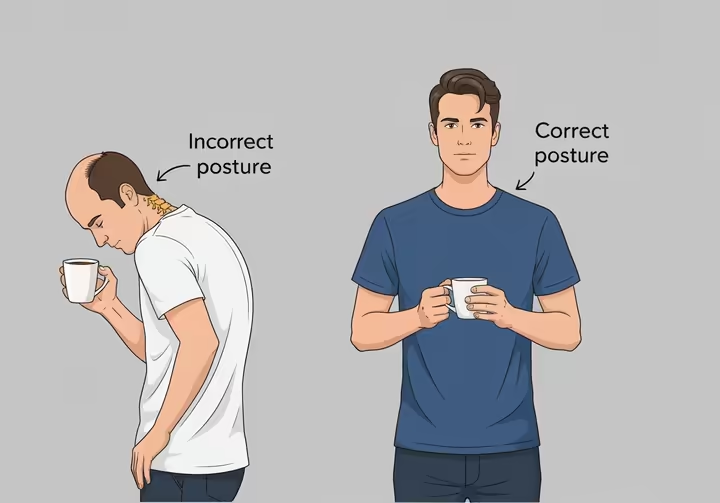
The key difference is the armrests. Instead of low handgrips, tall walkers feature high, adjustable forearm supports. 2 You rest your weight on your stronger forearms, not on your hands and wrists. 4
This simple change helps solve the chronic back, neck, and shoulder pain that comes from stooping over a standard walker. 1 Walking becomes more comfortable and confident. It's a design that both prevents falls and improves your quality of life.
You’ll hear these devices called a few different things, like "upright walker," "stand-up walker," or "upright rollator." They all refer to the same type of posture-correcting mobility aid with forearm supports and wheels. 3 Just don't confuse them with a "platform attachment," which is an add-on for a traditional walker and lacks the integrated design of a true tall walker. 9
Who Needs One?
A tall walker is a great fit for anyone who finds themselves stooping over a standard walker to feel stable. 1 If you live with chronic lower back pain, neck strain, or shoulder discomfort, the upright design can bring a lot of relief by taking pressure off these areas. 2
Seniors with arthritis or weakness in their hands and wrists also benefit greatly. The forearm platforms mean you don’t need a painful, forceful grip to support yourself. 2
If you get tired quickly when walking, a tall walker can help. The stooped position of a standard walker is inefficient and burns energy. 2 An upright walker promotes a more natural gait, helping you conserve energy and walk for longer. 2 It can also improve stability for those with balance issues by keeping your center of gravity properly aligned. 2
There's a big confidence boost, too. When you aren't staring at the ground, you can look ahead, make eye contact, and chat with people more easily. 2, 14 This ability to look forward helps you feel more connected and allows you to spot potential obstacles in your path. 8
What to Look For: The Key Parts
A good tall walker is a system of well-designed parts. Understanding these features helps you choose the right one for your needs, whether you'll be using it inside the house or out on the town.
Frame and Armrests
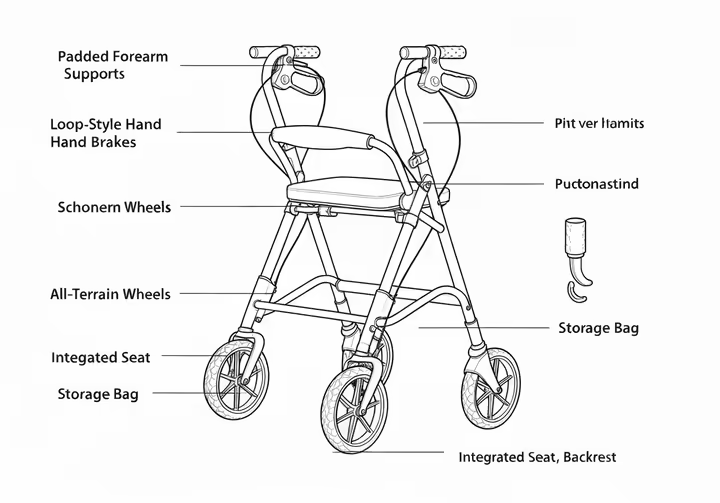
The main feature is the tall frame with elevated forearm supports. 3 These padded armrests are designed to transfer your body weight to your forearms, which encourages an upright posture and eases strain on your back, shoulders, and wrists. 4, 8
Frames are typically made of steel or aluminum. Steel is very strong and supports higher weight capacities, but it's heavier and can rust. 16 Aluminum is lighter, rust-resistant, and much easier to lift, though it may have a slightly lower weight capacity. 16
Wheels
Since these are rollators, the wheels are critical for safe use. 21 Wheel size is the most important factor. Smaller wheels, around 6 inches, are best for indoor use, as they allow for tighter turns in narrow hallways. 23
For outdoor use or varied terrain, bigger is better. Wheels from 8 to 12 inches are superior for handling uneven surfaces like cracked sidewalks, thick carpet, or grass, providing a smoother and more stable ride. 3 As a rule of thumb, a 10-inch wheel can clear a 1.5-inch obstacle, which is useful for door thresholds. 5
The All-Important Seat
An integrated seat is a crucial feature for anyone who gets fatigued easily or has conditions like COPD. 6 It gives you the freedom to venture farther from home, knowing a secure place to rest is always available.

When checking the seat, make sure its height allows your feet to rest flat on the ground. 29 It should also be wide enough to be comfortable, and its weight capacity must be higher than your body weight. 22
A backrest, usually a strap or padded bar, is an essential safety component. It provides support and prevents you from leaning back too far when seated. 13
Brakes and Safety
The braking system is non-negotiable for safety. Most tall walkers use loop-style hand brakes, similar to a bicycle. 32 Squeezing the levers slows the walker down, which is important on slopes or ramps.
To park it, you push the levers down until they click into a locked position. 30 This locking function is the single most critical safety step. It must be engaged every time before you sit down or use the walker for support when standing up. 14
How to Pick the Right One
Choosing the right tall walker isn't just about fancy features. It's about finding the one that fits your body, your lifestyle, and your home. A few simple measurements and considerations can make all the difference.
Getting the Right Fit
An improper fit can cause new aches and pains, defeating the purpose of the walker. 24 To find your fit, stand up straight in your everyday shoes with your arms relaxed at your sides. Have someone measure the distance from the floor to the crease of your wrist. 22
This measurement is the ideal height for the walker's forearm supports. When your forearms are on the rests, your elbows should have a slight, comfortable bend of about 15 degrees. 24 Make sure your measurement falls within the product's listed adjustment range.
Weight (Yours and the Walker's)
Every walker has a maximum user weight capacity, so choose a model that safely exceeds your current weight. Standard models typically support 250-350 pounds, while bariatric models are available for heavier individuals. 3
Also, consider the product's own weight, which is usually 20 to 35 pounds. 8 Be honest with yourself, can you or a caregiver lift that weight repeatedly? You'll need to lift it into a car or over stairs. 6
Folding and Portability
Most tall walkers fold for transport, but some do it more conveniently than others. Many newer designs use a side-to-side fold, often activated by pulling a strap on the seat. 39 This usually creates a more compact, upright folded shape that can stand on its own. 5
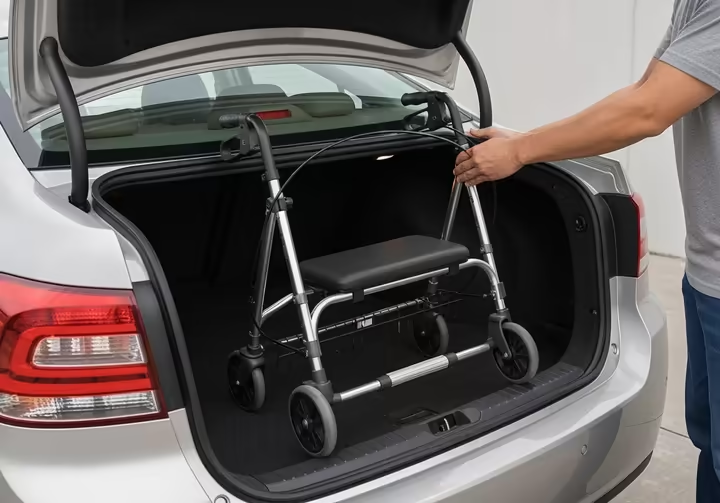
Before you buy, measure your car trunk and storage space at home to ensure the folded dimensions will fit. 3 The ease of the folding mechanism is also important for users with limited hand strength. 5
Indoors vs. Outdoors
Think realistically about where you'll use the walker most. If it's primarily for indoors, a slimmer frame with smaller wheels will be easier to navigate around furniture and through tight doorways. 24
If you plan to be active outdoors, a model with a sturdier frame and larger, more rugged wheels is a much better choice. It will provide a safer and more comfortable ride on sidewalks, grass, and other varied terrain. 3
How to Use It Safely
Getting the right walker is the first half of the battle, using it correctly is the other. A tall walker's design requires a mindful approach to stay safe and build confidence.
First Steps: Adjustment and Walking
When your walker arrives, adjust the forearm supports to your wrist height. 29 This should give your elbows a slight, comfortable bend and promote an upright posture. 45

When walking, stand well inside the walker's frame, with your feet between the rear wheels. 29 Gently push the walker a short distance ahead, keeping all four wheels on the ground, then step forward into it. 43
If one leg is weaker, always step forward with that leg first, followed by the stronger one. 47 And remember to look forward to scan your path, not down at your feet. 43
Turning and Tackling Obstacles
To turn, take small steps and pivot your body slowly in a wide arc rather than twisting at the waist. 46 In very tight spaces, you may need to turn the walker sideways and slide it through the opening as you step along with it. 49
For a curb or step, remember this trick: "up with the good, down with the bad." To go up, place the walker on the higher surface, then step up with your stronger leg. To go down, place the walker on the lower surface, then step down with your weaker leg. 43
Approach ramps with caution and control your speed. 29 A tall walker's higher center of gravity can make it prone to tipping if it hits an obstacle abruptly, so it's important to move at a controlled pace. 4
The Golden Rule for Sitting
The integrated seat is a great feature, but it can be dangerous if used improperly. Always follow these steps. First, move the walker to a flat, level surface.
Second, firmly push down on both brake levers until you hear or feel them click into the locked position. Third, turn around and back up slowly until your legs touch the seat's edge.
Fourth, reach back to hold the seat or armrests for stability. Finally, slowly lower yourself onto the seat. 29 Never attempt to sit without ensuring both brakes are securely locked. 32
Tall Walkers vs. Other Mobility Aids
It's helpful to see where a tall walker fits in with other common mobility aids. Your needs can change over time, so the right tool for the job might change, too.
vs. Standard Walkers
A standard walker (with two front wheels or none) offers maximum stability and is often used after surgery. 21, 52 However, it forces you into a forward stoop and requires you to lift the device with each step, which is tiring. 6 A tall walker prioritizes posture and a natural gait.
vs. Standard Rollators
Both are four-wheeled walkers with seats and brakes. The key difference is the support point. A standard rollator's low handgrips often encourage a forward lean. 2
A tall walker's elevated forearm platforms encourage an upright stance. 7 If you find yourself hunching over a standard rollator, or if it causes back or wrist pain, a tall walker is the better ergonomic choice. 7
vs. Canes and Wheelchairs
A cane is for individuals with mild balance issues affecting one side of the body, supporting up to 25% of a person's weight. 45 A tall walker provides significant support for balance and endurance on both sides of the body. 56
A wheelchair is necessary when someone cannot bear weight on their legs or can no longer walk safely. 10 The tall walker serves the large group of people in between, those who are mobile but need substantial support to walk safely and comfortably.
Common Questions (Answered!)
Deciding on a new mobility aid can bring up a lot of questions. Here are some straightforward answers to common concerns about tall walkers.
What's the main advantage over a regular walker?
Posture, posture, posture. The upright design helps reduce or prevent chronic pain in the back, shoulders, and neck. 2 It also shifts weight off the wrists, providing relief for those with arthritis. 2 This better posture allows for a more natural gait, which can increase endurance and restore a sense of dignity. 1, 2
Are they stable and safe?
Their wide wheelbase provides a stable base on level surfaces. 7 However, they have a higher center of gravity than a standard walker, so you must be cautious on uneven terrain, curbs, or ramps. 4, 8 Safe operation is a team effort between you and the walker, always control your speed and lock the brakes before sitting. 29
Are they heavy and hard to lift?
Yes, they are generally heavier than basic walkers, typically weighing 20 to 35 pounds. 5 This can be a challenge when lifting the walker into a car. Look for models made from lightweight aluminum and consider one with a simple side-to-side folding mechanism, as they are often easier to manage. 17, 36
Is assembly a nightmare?
Not usually. Most modern upright walkers require little to no tools for assembly. 57 The process typically involves unfolding the frame, snapping the wheels into place, and inserting the handles. 58 Many companies provide clear instructions and online video tutorials. 60
Can I use it in my small house?
Their larger footprint can make navigation in tight spaces tricky. 6 When shopping, look for models with a narrower frame. 25 A useful technique for tight doorways is to turn the walker sideways and slide it through the opening while you step along with it. 49
How much do they cost? Will insurance pay?
Tall walkers are an investment, with prices ranging from about $150 to over $600. 6 Medicare Part B may cover some of the cost if a doctor prescribes the walker as "medically necessary" and it's purchased from a Medicare-enrolled supplier. 64
If you qualify, Medicare typically covers 80% of the approved amount after you've met your deductible. 64 Private insurance policies vary, so it's always best to check with your provider directly.
Works cited
- UPWalker | The Revolutionary Breakthrough in Upright Walking!, https://upwalker.com/
- Who Should Choose Upright Rollator Walkers Over Standard Rollator Walk - Elenker, https://www.elenkerwalker.com/blogs/upright-walker/who-should-choose-upright-rollator-walkers-over-standard-rollator-walkers
- The Best Stand-Up Walkers: An Occupational Therapist's Expert ..., https://www.rehabmart.com/post/the-best-standup-walkers
- Upright Walkers as Mobility Assistive Devices for Older Adults - AAFP, https://www.aafp.org/pubs/afp/issues/2022/0500/ol1.html
- Regular Walker vs Upright Walker for Seniors: Which Actually Helps More? - Resource for Seniors and Caregivers | SeniorSite, https://seniorsite.org/resource/regular-walker-vs-upright-walker-for-seniors-which-actually-helps-more/
- Upright Walker VS Traditional Walker - Elenker, https://www.elenkerwalker.com/blogs/upright-walker/upright-walker-vs-traditional-walker
- Is An Upright Walker Better Than A Rollator? [VIDEO] - Rehabmart.com, https://www.rehabmart.com/post/is-an-upright-walker-better-than-a-rollator
- Upright Walkers: A Comprehensive Guide to Help You Choose the Right One - Equip2Adapt, https://equip2adapt.com/blog/choosing-an-upright-walker/
- A Comprehensive Guide to Walkers, Rollators, and Assistive Devices, https://www.tula.nyc/blog/a-comprehensive-guide-to-walkers-rollators-and-assistive-devices
- Walker Vs Rollator: Which Is Best For Seniors? - AskSAMIE, https://www.asksamie.com/blogs/how-to-age-in-place/walker-vs-rollator
- Platform Walker | Forearm Walker Attachments - AvaCare Medical, https://www.avacaremedical.com/walking-aids/walkers/platform-walker
- 6 Reasons for Buying an Upright Walker - OasisSpace, https://www.oasisspace.com/blogs/healthcare/reasons-for-buy-upright-walker
- Are upright walkers better for seniors? – Elenker, https://www.elenkerwalker.com/blogs/upright-walker/are-upright-walkers-better-for-seniors
- How an Upright Walker Gives You Independence & Other Benefits, https://www.copperstarhomemedical.com/how-an-upright-walker-gives-you-independence-other-benefits/
- Benefits of Using a Walker for Seniors: How to Choose & Use ..., https://www.medicalalertadvice.com/articles/walkers-for-seniors-benefits-and-how-to-choose-your-best-option/
- What is the best frame material for a walker? (Walkers) - AvaCare Medical Help Center, https://answers.avacaremedical.com/5607853/What-is-the-best-frame-material-for-a-walker
- What are the Pros and Cons of steel and aluminum rollator walker?, https://www.skdmedical.com/news/what-are-the-pros-and-cons-of-steel-and-aluminum-rollator-walker
- Walking Frames: Making Life Easier One Step at a Time - Essential Aids, https://www.essentialaids.com/blog/walking-frames-making-life-easier-one-step-time.html
- Tall Walkers for Seniors | Tall Walker With Wheels | AvaCare Medical, https://www.avacaremedical.com/walking-aids/walkers/tall-walkers-for-seniors
- Upright Walker - Tall - oxygenplusconcentrators, https://www.oxygenplusconcentrators.com/products/upright-walker-tall
- Tips for choosing and using walkers - Mayo Clinic, https://www.mayoclinic.org/healthy-lifestyle/healthy-aging/in-depth/walker/art-20546805
- Benefits of a rollator vs a standard walker - My Plan Manager, https://myplanmanager.com.au/benefits-of-a-rollator-vs-a-standard-walker/
- Tips for Finding the Right Fit: Choosing the Correct Size of Mobility Walkers for Seniors, https://www.trionic.us/en/tips-for-finding-the-right-fit-choosing-the-correct-size-of-mobility-walkers-for-seniors-i-174
- 4 Tips to Choose the Best Walker or Rollator - Silver Cross, https://silvercross.com/walkers-and-rollators/how-to-choose-a-walker-rollator/
- Top Rollator Walker Features for Indoor Use - Elenker, https://www.elenkerwalker.com/blogs/rollator-walkers/top-rollator-walker-features-for-indoor-use
- How to Choose a Bariatric Walker Rollator - Rehabmart.com, https://www.rehabmart.com/post/how-to-choose-a-bariatric-walker-rollator
- Rollator Walker with Seat, Tall Walkers for Seniors | eBay, https://www.ebay.com/itm/336044626565
- Caregivers' Guide To Choosing the Best Rollator Walker | Trualta, https://www.trualta.com/resources/blog/caregivers-guide-to-choosing-the-best-rollator-walker/
- Physiotherapy: How to choose and use a 4-wheeled walker, https://myhealth.alberta.ca/Health/Pages/conditions.aspx?hwid=custom.ab_physio_4wheeledwalker_inst
- Tall Rolling Walkers - My Medical House, https://www.mymedicalhouse.com/collections/walking-aids-rolling-walkers-tall-rolling-walkers
- UPWalker by LifeWalker | Upright Walker with Seat, https://upwalker.com/products/upwalker
- What is the proper way to operate a 4 wheel rollator walker? (4 Wheel Walker) - AvaCare Medical Help Center, https://answers.avacaremedical.com/5771971/What-is-the-proper-way-to-operate-a-4-wheel-rollator-walker
- Vive Health Upright Walker / Rollator Unboxing & Assembly Video - YouTube, https://www.youtube.com/watch?v=x99i6ABlE68
- read these important safety instructions prior to operating your medline rolling walker - AWS, https://shermanoaksmedical.s3.us-west-1.amazonaws.com/137c631fe2234829a931b9183e4280a7/owners-guide.pdf
- Rollator Buying Tips - Finding the Right Model for Your Needs - Mobility-Advisor.com, https://www.mobility-advisor.com/rollator.html
- What Are the Disadvantages of a Rollator Walker and Solutions? - Elenker, https://www.elenkerwalker.com/blogs/rollator-walkers/what-are-the-disadvantages-of-a-rollator-walker-and-solutions
- The Perfect Fit: Walkers for Tall People | Tall Walker with Wheels - Ease Living, https://www.easeliving.com/blogs/news/the-perfect-fit-walkers-for-tall-people
- Uncovering The Best Walkers For Tall People In 2025, https://mobilityheaven.com/uncovering-the-best-walkers-for-tall-people/
- Simply fold the rollator | The differences - Saljol, https://www.saljol.de/en/folding-the-walker-rollator/
- How to Fold the Vive Mobility Upright Walker - YouTube, https://www.youtube.com/watch?v=UiBhq0XZCcI
- How to fold upright walker? - Elenker, https://www.elenkerwalker.com/blogs/upright-walker/how-to-fold-upright-walker
- Are There Rollators Designed for Narrow Hallways? - Elenker, https://www.elenkerwalker.com/blogs/rollator-walkers/are-there-rollators-designed-for-narrow-hallways
- Using a walker: MedlinePlus Medical Encyclopedia, https://medlineplus.gov/ency/patientinstructions/000342.htm
- How To Use a Walker - Cleveland Clinic, https://my.clevelandclinic.org/health/procedures/how-to-use-a-walker
- Tip Sheet: Choosing the Right Cane or Walker | HealthInAging.org, https://www.healthinaging.org/tools-and-tips/tip-sheet-choosing-right-cane-or-walker
- Tips on How To Use a Walker With Wheels Safely - Senior Services of America, https://seniorservicesofamerica.com/blog/how-to-use-a-walker-with-wheels-safety-and-movement-recommendations/
- How to Use a Walker - Together by St. Jude™, https://together.stjude.org/en-us/medical-care/rehabilitation/how-to-use-a-walker.html
- How to Walk With a Walker - Ultimate Care NY, https://www.ultimatecareny.com/resources/how-to-walk-with-a-walker
- Narrow Doorways with Walker? Avoid this - YouTube, https://www.youtube.com/watch?v=p45WHXcMMC4
- Two-Wheeled Rolling Walker - YouTube, https://www.youtube.com/watch?v=OFGUCXwRIo0
- How to use upright walker? - Elenker, https://www.elenkerwalker.com/blogs/upright-walker/how-to-use-upright-walker
- Rollator Walker Vs. Traditional Walker: How To Choose - Trualta, https://www.trualta.com/resources/blog/rollator-walker-vs-traditional-walker-which-one-is-right-for-your-loved-one/
- How to Choose the Best Walker or Rollator for Your Patient | Performance Health, https://www.performancehealth.com/articles/how-to-choose-the-best-walker-or-rollator-for-your-patient
- What is the Difference Between a Walker & a Rollator? - Drive Medical, https://www.drivemedical.com/blog/what-is-the-difference-between-a-walker-and-rollator
- A Comprehensive Guide to Walkers, Rollators, and Assistive Devices, https://tula.nyc/blog/a-comprehensive-guide-to-walkers-rollators-and-assistive-devices
- Walkers, Canes, Rollators, Crutches, Transfer Boards - Marx Medical Equipment, https://www.marxmedicalequipment.com/equipment/walkers-canes-rollators-crutches-transfer-boards/
- How to Assemble Elenker Upright Walker?, https://www.elenkerwalker.com/blogs/upright-walker/how-to-assemble-elenker-upright-walker
- Top 10 Walkers for Seniors – Guide for Mobility & Independence, https://allseniors.org/articles/top-10-walkers-for-seniors-guide-for-mobility-independence/
- Learn About Walkers and Rollators Assembly and Service - Silver Cross, https://silvercross.com/walkers-and-rollators/walkers-rollators-service/
- How to Assemble the Vive Mobility Upright Walker - YouTube, https://www.youtube.com/watch?v=VcZHFABMGxg
- Has anyone tried an upright walker? : r/ehlersdanlos - Reddit, https://www.reddit.com/r/ehlersdanlos/comments/1gcoqgk/has_anyone_tried_an_upright_walker/
- What Is The Best Upright Walker For 2026 | Run Dream Achieve, https://rundreamachieve.com/best-upright-walker/
- Designer Rollators and Walkers for Seniors and the Elderly - HME Medical Shop, https://www.hmemedicalshop.com/mobility-aids/designer-walkers.html
- Are upright walkers covered by Medicare? – Elenker, https://www.elenkerwalker.com/blogs/upright-walker/are-upright-walkers-covered-by-medicare