POTS for Seniors: A Guide to Mobility Aids
Got POTS? If standing up makes your heart race and your head spin, you’re in the right place. This guide is all about the tools, like walkers and wheelchairs, that can help you stay on your feet (or off them, when you need to be) and keep doing your thing.
POTS, You, and Getting Around
A diagnosis of Postural Orthostatic Tachycardia Syndrome (POTS) later in life can be a curveball. The sudden dizziness, fatigue, and racing heart are disruptive. It's easy to feel like you're losing your independence.

But mobility aids are smart, strategic tools for saving energy and staying safe. A cane or walker isn't about giving up, it's about adapting so you can stay active. It's a tool, not an identity, just like glasses or a hearing aid.
So, What Is POTS Anyway?
Let's get this straight, POTS isn't a heart problem. Your heart is usually fine. 6 It’s a glitch in your autonomic nervous system, the system that runs all the background stuff like heart rate and blood pressure without you thinking about it. 6
When you stand up, gravity pulls blood down into your legs and belly. Normally, your body tightens the blood vessels down there to push the blood back up to your brain. With POTS, that signal gets messed up. 6
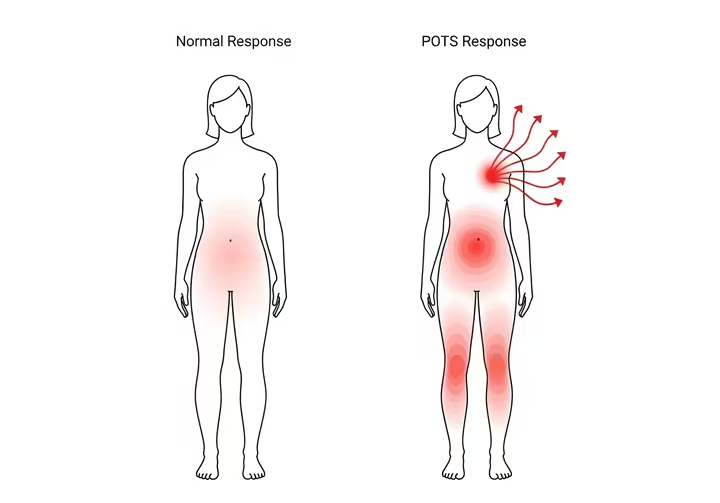
The blood just kind of... hangs out in your lower body (this is called "blood pooling"). Your brain freaks out about not getting enough blood and tells your heart to PUMP FASTER to fix it. That's the racing heartbeat, and it's what causes most of the classic POTS symptoms. 10
- Dizziness and lightheadedness 6
- Fainting 8
- "Brain fog" or trouble concentrating 6
- Serious fatigue 6
- Headaches and blurred vision 6
- Nausea 6
- Reddish-purple legs when you stand (it's the blood pooling!) 6
For seniors, getting a POTS diagnosis can be tough because the symptoms, like dizziness and fatigue, are often brushed off as "just getting older." 14 The key is the pattern: symptoms hit when you're upright and get better when you lie down. It’s not just feeling dizzy, it’s feeling dizzy because you stood at the kitchen counter for five minutes. 6
When to Get Some Help
So, when is it time for a mobility aid? It’s usually a slow realization that you're planning your life around your symptoms. Here are some clues it might be time to look at your options.
- You're afraid of falling, have had a few close calls, or you're "furniture-walking" around the house. 16
- A simple trip to the grocery store wipes you out for the rest of the day. 17
- You've stopped doing things you enjoy, like visiting museums or going to events, because of all the standing involved. 6
- You're turning down invitations from friends because you just don't have the energy. 1
- Daily tasks like cooking or doing laundry feel like running a marathon. 18
Think of your daily energy like a budget. With POTS, just standing up is incredibly expensive. You might be able to force yourself to walk through a store, but the "cost" might be that you're too exhausted to do anything else later. 13
A mobility aid helps you manage that energy budget. By spending less energy on walking, you have more to spend on the things you actually enjoy. It’s a trade-off that gives you your life back. 23
Your POTS Toolkit
Choosing an aid is about matching the right tool to your symptoms. Let's look at the options, from basic support to the big guns.
Start with Compression
Before anything else, think about compression wear. These aren't just socks, they're a medical tool that physically squeezes your legs and abdomen. This squeeze stops blood from pooling and helps push it back up to your brain. 24
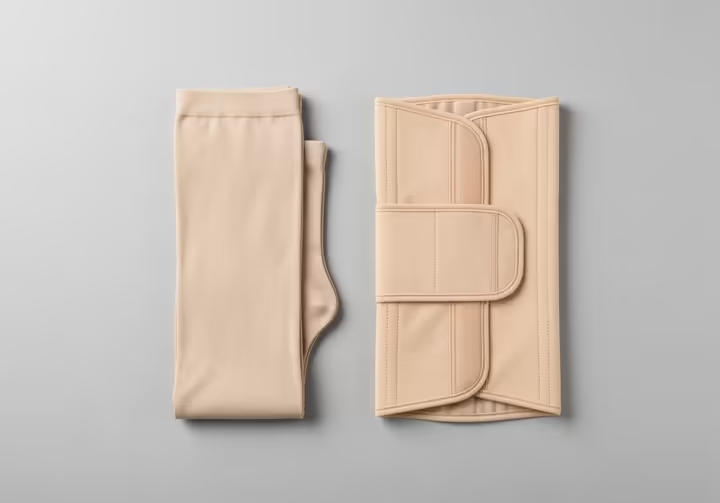
For POTS, you need to go big, knee-highs won't cut it. Look for waist-high compression leggings or stockings (20-30 mmHg is a good starting point) and consider adding an abdominal binder. 24, 27 For many, this is the single most effective tool. 26
Canes: For a Little Extra Support
If you're mostly dealing with mild unsteadiness or just want more confidence, a cane is a great start. It gives you an extra point of contact with the ground, which makes a surprising difference. 18
- Single-Point Cane: Your standard, lightweight cane. Great for a little extra stability. 28
- Quad Cane: This one has four little feet at the base. It’s more stable and can stand on its own, which is handy. It's better if you have more significant balance issues. 28
- Get the Right Fit: To get the right height, stand straight in your normal shoes with your arms at your sides. The top of the cane handle should hit the crease of your wrist. 29
Rollators: The Real MVP
For many people with POTS, a rollator (a walker with wheels and a seat) is a total game-changer. It tackles both dizziness and fatigue head-on.
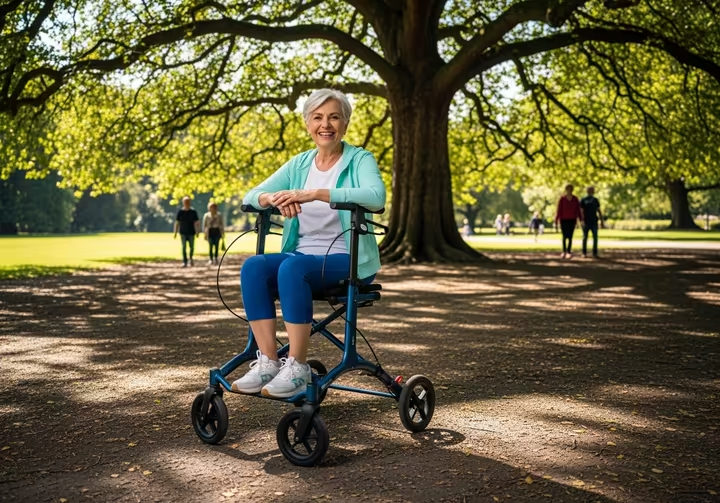
- It Beats Dizziness: The built-in seat is its superpower. 31 The second you feel lightheaded, you have a safe place to sit down immediately. Sitting reverses the blood pooling and can stop a faint before it happens. 6 No more dreading the long line at the pharmacy!
- It Fights Fatigue: The seat also lets you manage your energy. You can take planned rest breaks instead of pushing yourself to exhaustion. 33 This means you can actually go to the park or the mall without paying for it later. 35
- What to Look For: Big wheels are better for outdoors. 31 Make sure the brakes are easy for you to use. 37 And think about weight, a lighter carbon fiber or aluminum model is easier to lift into a car. 37
Wheelchairs & Scooters: The Big Guns
Sometimes, even a short walk is too much. In that case, a wheelchair or scooter is the best way to save energy and get your freedom back. You might need one if you faint often or if any amount of walking leaves you totally drained. 16, 18
- Transport Chair: Super light and portable, but it needs someone to push it. Perfect for appointments on bad days. 31
- Manual Wheelchair: You can push this one yourself or have someone else push. An ultralight model is key, since it takes less energy to move. 31
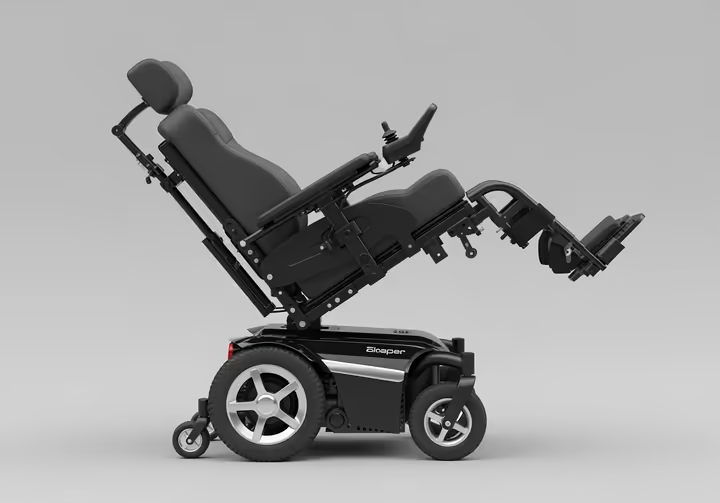
- Power Wheelchair or Scooter: These do all the work for you, which is ideal for severe fatigue or for traveling longer distances on your own. 38
- POTS-Friendly Features: Look for a "tilt-in-space" or "recline" function. Both let you elevate your legs, using gravity to help send blood back to your brain and relieve symptoms on the spot. 38 Elevating leg rests are also great for this.
Picking Your Perfect Match
So which one is for you? This chart breaks it down based on what you need most.
| Feature / Consideration | Cane | Rollator (with Seat) | Wheelchair or Scooter |
|---|---|---|---|
| Main POTS Symptom Addressed | Mild dizziness, unsteadiness. | Sudden dizziness, pre-fainting, fatigue. | Severe fatigue, high risk of fainting. |
| Level of Support | Low. Just an extra point of contact. | Medium. A stable frame to lean on. | High. Full seated support. |
| Energy Saved | Low. You're still doing all the walking. | Medium. Lets you take rest breaks. | High. Saves the most energy. |
| Best For... | Feeling a bit unsteady in familiar places. | Shopping, walks, any place you might have to wait or stand. | All-day outings, managing bad symptom days, getting around without getting tired. |
| Portability | Excellent. Easy to use anywhere. | Good. Folds up for the car but can be bulky indoors. | Fair to Poor. May need an accessible vehicle and ramps. |
What If You’ve Got Other Stuff Going On?
It's important to think about your whole health picture.
- Arthritis: If your hands hurt, look for ergonomic, padded grips. Pushing a standard walker might be painful, so an easy-gliding rollator or a power chair could be a better fit. 34, 38
- COPD or Heart Failure: Saving energy is everything. A lightweight rollator or scooter can help you stay active without getting breathless. 47
- Vision Problems: The solid base of a quad cane or a rollator offers a lot more security than a single-point cane.
Will It Fit in Your House?
Your new tool has to work at home. Take a quick tour and check a few things.
- Doorways: Measure your narrowest doorways. You'll need this number when you're shopping for a rollator or wheelchair. 37
- Floors: Get rid of throw rugs, they're a major trip hazard. 48 Larger wheels work better on carpet.
- Stairs: If you have multiple floors, you might need a solution for each, like keeping one walker upstairs and another down. A stairlift could also be an option. 49
Don't Go It Alone, Talk to a Pro
Okay, we've given you a lot of info, but don't just take our word for it. The most important step is to see a Physical Therapist (PT) or an Occupational Therapist (OT). They are the experts in this stuff. 51
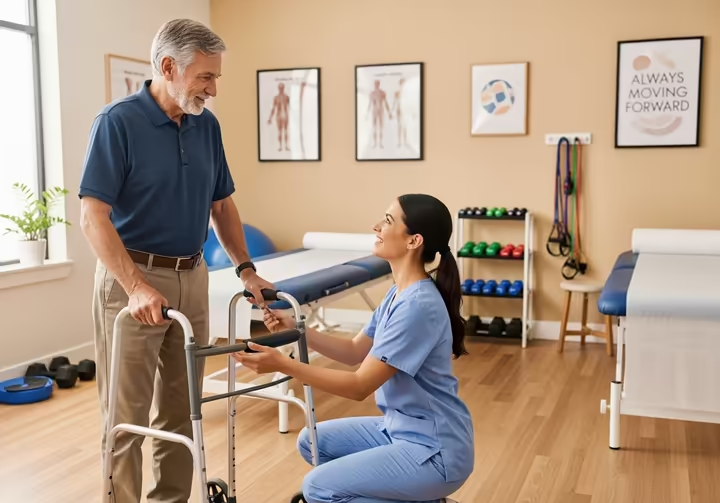
A PT or OT will check your strength and balance, talk about the stuff you do every day that's become a pain, and ask about your home layout. 51 Best of all, they'll let you try out different aids to see what feels right and will measure you to make sure it's a perfect fit. 52
This step prevents big mistakes, like getting a rollator with handles that are too high (hello, back pain) or a wheelchair that's too wide for your bathroom door. They can also help you with the paperwork for insurance. 51
The Takeaway
Living with POTS as a senior has its challenges, but it's manageable. It's all about understanding what's going on and using the right tools to live your life.
- POTS is real. It’s a glitch in your nervous system, not just a part of aging. Remember the pattern: up is bad, down is good.
- Mobility aids are for empowerment. They help you save energy, prevent falls, and stay independent.
- Choose the right tool for the job. A rollator with a seat is fantastic for outings, while a wheelchair is best for saving maximum energy.
- Ask an expert. A PT or OT will make sure you get the right device and that it's fitted correctly for you.
Deciding to use a mobility aid is a powerful choice. It's an investment in your safety, your energy, and your quality of life. Now you have the information to move forward with confidence.
Works cited
- The Psychological Benefits of Mobility Aids, https://comfygomobility.com/blogs/news/the-psychological-benefits-of-mobility-aids
- Exploring the Psychological Impact of Mobility Assistance Devices - Redman Power Chair, https://www.redmanpowerchair.com/exploring-the-psychological-impact-of-mobility-assistance-devices/
- Perspectives on Use of Mobility Aids in a Diverse Population of Seniors: Implications for Intervention - PMC, https://pmc.ncbi.nlm.nih.gov/articles/PMC2768139/
- Mobility aids: Types, benefits, and use - Medical News Today, https://www.medicalnewstoday.com/articles/318463
- The Profound Connection Between Mobility Aids and Mental Health in Seniors - Hartmobility, https://hartmobility.com/the-profound-connection-between-mobility-aids-and-mental-health-in-seniors/
- Postural Orthostatic Tachycardia Syndrome (POTS) - Johns Hopkins Medicine, https://www.hopkinsmedicine.org/health/conditions-and-diseases/postural-orthostatic-tachycardia-syndrome-pots
- Reversible postural orthostatic tachycardia syndrome - PMC - PubMed Central, https://pmc.ncbi.nlm.nih.gov/articles/PMC4517341/
- Postural orthostatic tachycardia syndrome - Wikipedia, https://en.wikipedia.org/wiki/Postural_orthostatic_tachycardia_syndrome
- Pooling in Chronic Orthostatic Intolerance | Circulation, https://www.ahajournals.org/doi/10.1161/01.cir.0000016348.55378.c4
- Blood Pooling and POTS - NormaLyte, https://normalyte.com/blogs/news/blood-pooling-and-pots
- Postural Orthostatic Tachycardia Syndrome (POTS) - Cedars-Sinai, https://www.cedars-sinai.org/health-library/diseases-and-conditions/p/postural-orthostatic-tachycardia-syndrome-pots.html
- Postural Orthostatic Tachycardia Syndrome (POTS) - Cleveland Clinic, https://my.clevelandclinic.org/health/diseases/16560-postural-orthostatic-tachycardia-syndrome-pots
- Living With POTS - Australian POTS Foundation, https://potsfoundation.org.au/living-with-pots/
- Orthostatic hypotension (postural hypotension) - Symptoms & causes - Mayo Clinic, https://www.mayoclinic.org/diseases-conditions/orthostatic-hypotension/symptoms-causes/syc-20352548
- Orthostatic hypotension in older people: considerations, diagnosis and management - PMC, https://pmc.ncbi.nlm.nih.gov/articles/PMC8140709/
- Mobility aids | healthdirect, https://www.healthdirect.gov.au/mobility-aids
- 5 Signs You May Need an Assistive Mobility Device - Advent Christian Village, https://www.acvillage.net/resources/assistive-mobility-device/
- Mobility Aids for Chronic Pain: A Buyer's Guide - Pathways, https://www.pathways.health/blog/mobility-aids-for-chronic-pain-a-buyers-guide/
- Cognitive and Psychological Issues in Postural Tachycardia Syndrome - PMC, https://pmc.ncbi.nlm.nih.gov/articles/PMC6160364/
- Life in a wheelchair - Elaine's story - MS Trust, https://mstrust.org.uk/news/stories/life-a-wheelchair-elaines-story
- How my wheelchair changed my life - Wellcome Collection, https://wellcomecollection.org/stories/how-my-wheelchair-changed-my-life
- How Getting a Wheelchair for My Chronic Illness Changed My Life - Healthline, https://www.healthline.com/health/how-a-wheelchair-changed-my-life
- The journey to becoming a wheelchair user - Chronically Ill Kat, https://chronicallyillkat.com/2020/09/06/the-journey-to-becoming-a-wheelchair-user/
- Lifestyle Changes for Autonomic Disorders - NYU Langone Health, https://nyulangone.org/conditions/autonomic-disorders/treatments/lifestyle-changes-for-autonomic-disorders
- Compression Garments for POTS, EDS, ME/CFS and More | The EDS Clinic, https://www.eds.clinic/articles/compression-garments-for-pots-oh-eds-me-cfs
- Compression Garments - Dysautonomia Support Network, https://www.dysautonomiasupport.org/compression-garments/
- Compression Garments - Awareness for POTSies, https://www.awarenessforpotsies.org/compression-garments-pots
- Quad Cane Vs. Standard Cane: Which One Choose? | Trualta, https://www.trualta.com/resources/blog/quad-cane-vs-standard-cane-which-one-should-you-choose/
- Tips for choosing and using canes - Mayo Clinic, https://www.mayoclinic.org/healthy-lifestyle/healthy-aging/in-depth/canes/art-20548206
- Proper Cane Height and How to Use a Cane - Baker Valley Physical Therapy, https://www.bakervalleypt.com/Newsletters/Full-Articles/Proper-Cane-Height-and-How-to-Use-a-Cane/a~31207/article.html
- Mobility Aids - Awareness for POTSies, https://www.awarenessforpotsies.org/mobility-aids
- Signs Your Loved One Could Benefit From A Rollator Walker - Trualta, https://www.trualta.com/resources/blog/signs-your-loved-one-could-benefit-from-a-rollator-walker/
- Living with POTS-Ila's story (US) - byACRE, https://www.byacre.com/us/living-with-pots-ilas-story/
- Tips for choosing and using walkers - Mayo Clinic, https://www.mayoclinic.org/healthy-lifestyle/healthy-aging/in-depth/walker/art-20546805
- What are the Benefits of Lightweight Walkers with Wheels and a Seat? - TOPRO USA, https://toprorollator.com/light-weight-rollator-with-seat/
- The Benefits of Rollators for Seniors - Stay Active & Social - Medpoint, https://medpoint.ie/the-benefits-of-rollators-for-seniors/
- How to Choose the Best Rolling Walker (aka Rollator) - Rehabmart.com, https://www.rehabmart.com/post/how-to-choose-the-best-rolling-walker-aka-rollator
- Right Wheelchair for Ehlers-Danlos Syndrome (EDS) and POTS? - Eclipse Mobility, https://eclipse.care/choosing-the-right-wheelchair-for-ehlers-danlos-syndrome-eds-and-pots/
- Wheelchair - MEpedia, https://me-pedia.org/wiki/Wheelchair
- Comparison of fatigue life for 3 types of manual wheelchairs - PubMed, https://pubmed.ncbi.nlm.nih.gov/11588758/
- The Best Wheelchair Guide - Freedom Care, https://freedomcare.com/types-of-wheelchairs/
- PURAP Liquid & Air Layer Wheelchair Cushion for Pressure Relief & Beds, https://getpurap.com/products/purap-bedsore-wheelchair-cushion
- Order Our Wheelchair Cushions for Pressure Relief | 1800wheelchair.com, https://www.1800wheelchair.com/category/wheelchair-cushions/
- Ease Cushion® | Smart Seat Cushion | Pressure Sores & Back Pain Relief, https://easeseatingsystems.com/
- How To Correctly Use a Rollator at Home and Outside - OT Advice - CareCo, https://www.careco.co.uk/blog/how-to-correctly-use-a-rollator-at-home-and-outside/
- Assistive Devices: Living Better With Arthritis - WebMD, https://www.webmd.com/arthritis/features/living-easier-arthritis-devices
- Top 6 Mobility Aids to Help Seniors Stay Independent at Home | ThedaCare, https://homemedical.thedacare.org/blog/post/top-6-mobility-aids-to-help-seniors-stay-independent-at-home
- Living With Arthritis: Which Devices Can Help? - Compassionate Nursing Services, https://compassionstl.com/devices-for-living-with-arthritis/
- Your home | Tips, aids, pillows and adaptations | Versus Arthritis, https://versusarthritis.org/about-arthritis/living-with-arthritis/your-home/
- Mobility Aids - What People With Arthritis Need to Know - Verywell Health, https://www.verywellhealth.com/mobility-aids-what-you-need-to-know-189387
- Wheelchair Evaluation - Cleveland Clinic, https://my.clevelandclinic.org/-/scassets/files/org/neurological/mellen-center/wheelchair-eval.ashx
- Occupational Therapists Provide Wheelchair Assessments for better quality of life, https://www.ot-works.com/2025/01/occupational-therapists-provide-wheelchair-assessments-for-better-quality-of-life/