A No-Nonsense Guide to Walkers for Seniors with Balance Problems
Feeling a bit unsteady on your feet? A walker can be a game-changer... but not just any walker will do. Let's figure out which one is right for you, and why the one you think you need might be all wrong.
The Fear Factor
A little wobble can quickly turn into a big fear of falling. That fear makes you move less, which makes your muscles weaker, which... surprise!... makes you more likely to fall. It's a nasty cycle.

A good walker breaks that cycle. It gives you the physical support and mental confidence to get moving again. It’s a tool for freedom, not a sign of weakness.
Why Standard Walkers Stink (for Balance)
You know the classic gray walkers, the ones without wheels? They're called "pickup" walkers for a reason. You have to lift the whole thing up, move it forward, and step into it.

That "lift-and-place" motion is the problem. For the split second the walker is in the air, you're completely unsupported. If you’re already dizzy or unsteady, that’s a recipe for disaster.
A walker with wheels, called a rollator, is almost always better for balance issues. It stays on the ground, giving you constant, uninterrupted support. No lifting, no balancing act, no problem.
The Best Bet: Four-Wheel Rollators
For most people with balance problems, a four-wheel rollator is the way to go. It has a wide, stable base that glides along with you, making your walking pattern feel more natural. Two features are absolutely essential, though: brakes and a seat.
Brakes are a Big Deal
A rollator's brakes are its most important safety feature, period. They usually work like bicycle brakes, with hand loops on the handlebars. Squeeze them to slow down.

But the best part is the parking brake. You push down on the brake handles until they lock. This is crucial-you MUST lock the brakes before you try to sit down or stand up, so the walker doesn’t shoot out from under you.
A Seat is Not a Luxury
The built-in seat is a fatigue-fighter. Feeling unsteady can be exhausting, and being tired makes your balance even worse. The seat lets you stop and take a secure rest at any moment.
It transforms what you can do. A trip to the grocery store or a walk in the park seems possible again. You can rest before you get exhausted, letting you stay out longer and live your life.
Weight Matters
A walker is useless if it's too heavy to lift into a car. If you can't manage it, it will just sit at home gathering dust. That’s why its overall weight is a big deal.
Aluminum: The Standard Choice
Most good rollators are made of lightweight aluminum. They are strong and stable but usually weigh between 14 and 18 pounds, a weight most people can handle. An aluminum model is a great, affordable choice.
Carbon Fiber: The Fancy Stuff
For those who need the absolute lightest option, there's carbon fiber. It's incredibly strong but can bring a rollator's weight down to as little as 11 pounds. That small difference can be what allows someone to lift it into a car by themselves.
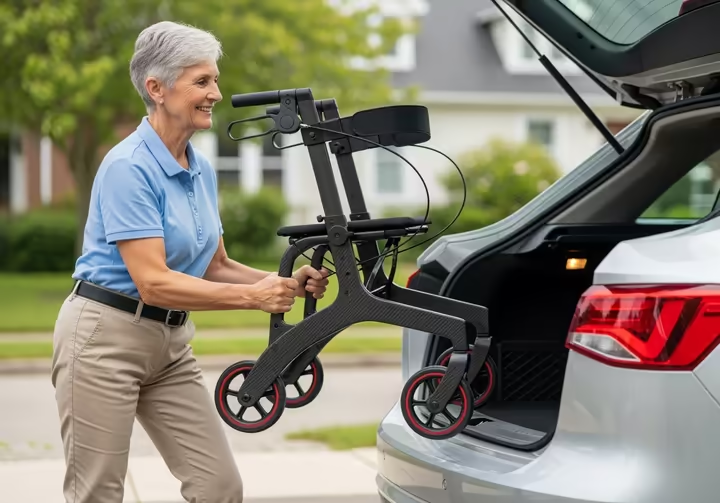
Carbon fiber models cost more, of course. But for the right person, that extra cost buys real independence.
The Skinny on Three-Wheelers
A three-wheel walker has a triangular shape that makes it super nimble. It can turn on a dime, which is great for navigating narrow hallways or a crowded little shop. It's the king of tight spaces.
But that agility comes at a cost, stability. That triangle shape is just easier to tip over, especially on a ramp or a bumpy sidewalk. Plus, most three-wheelers don't have a seat.
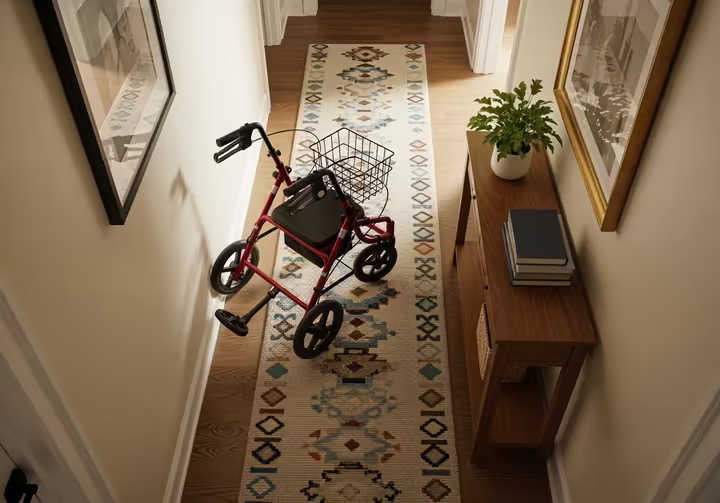
So, who are they for? People who need just a little bit of support and will use it mostly indoors. For anyone with serious balance problems, the four-wheel rollator is a much safer bet.
The Two-in-One: Rollator-Chairs
What if your problem is less about balance and more about running out of steam? A rollator-transport chair combo might be for you. It's a clever device that's both a rollator and a simple wheelchair.
You walk with it as a normal rollator for as long as you feel good. When you get tired, you flip the backrest around, pop down the footrests, and have a companion push you the rest of the way.

It’s perfect for long outings, like a day at the museum or getting through an airport. It lets you participate instead of staying home because you’re worried about getting too tired.
The Nitty-Gritty Details
Okay, you’ve picked a type of walker. Now for the details that make it safe and comfortable. Getting these right is just as important.
Wheel Size
Small wheels (6-7 inches) are fine for smooth indoor floors. But take them outside, and they can catch on a crack in the pavement and send you flying. It’s a serious fall risk.
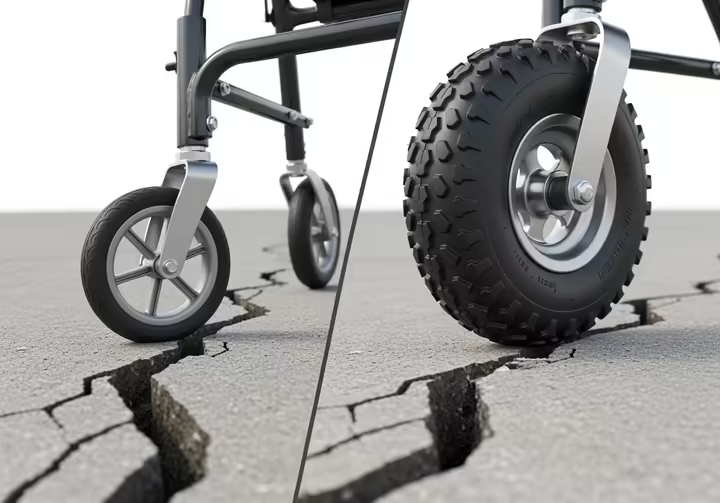
Larger wheels (8 inches or more) are much better for all-around use. They roll over bumps, cracks, and even grass with ease, giving you a smoother, safer ride. If you plan on leaving the house, get bigger wheels.
Seat Smarts
The seat needs to be the right height. When you're sitting, your feet should be flat on the floor with your knees at about a 90-degree angle. Too high and your feet dangle; too low and it's tough to stand back up.
Also, look for a padded seat and a backrest. The backrest is for more than just comfort, it keeps you from leaning back too far and taking a tumble.
Handlebars
Handles at the wrong height are bad news. Too low, and you'll be hunched over, which hurts your back and throws off your balance. Here's the trick to get it right.
Stand up straight inside the walker with your arms hanging relaxed at your sides. The handgrips should be adjusted to be level with the crease of your wrist. This gives your elbows a slight, comfortable bend.
Width and Folding
Before you buy anything, measure your narrowest doorway (it’s usually the bathroom). The walker needs to be a few inches narrower than that to get through easily.
Also, check how it folds. Some fold front-to-back, which can still be bulky. Others fold side-to-side (like an accordion), which is often more compact and can even stand on its own while folded.
So, What's the Verdict?
Choosing the right walker is about being honest about your life. Will you be indoors or out? Can you lift 18 pounds? Are your balance issues mild or severe?
This guide gives you the basics. But your best bet is to chat with a professional, like a physical therapist or an occupational therapist. They can measure you up and give you hands-on training to make sure you get the perfect fit.
Remember, a walker isn't about giving up. It's a tool that gives you back your freedom to move around safely and confidently.
Works cited
- Older Adults and Balance Problems | National Institute on Aging, https://www.nia.nih.gov/health/falls-and-falls-prevention/older-adults-and-balance-problems
- Keeping Your Balance as You Age | Dartmouth Health, https://www.dartmouth-health.org/articles/keeping-your-balance-you-age
- How To Conquer the Fear of Falling, https://health.clevelandclinic.org/do-you-worry-about-falling-how-to-conquer-the-fear
- Falls caused by balance disorders in the elderly with multiple systems involved: Pathogenic mechanisms and treatment strategies - PubMed Central, https://pmc.ncbi.nlm.nih.gov/articles/PMC9996061/
- The Benefits of Rollator Walkers for Seniors - EZ Walker Rollators, https://www.ezwalkerrollators.com/blog/post/the-benefits-of-rollator-walkers-for-seniors-maintaining-independence-and-safety
- Using Walkers: Safety Tips for Seniors - Home Care Services ..., https://www.comforcare.com/blog/using-walkers-safety-tips-for-seniors/
- The Benefits of Using a Rollator Walker: Mobility and Stability in One, https://harmonyhomemedical.com/blogs/home-medical-resources/the-benefits-of-using-a-rollator-walker-mobility-and-stability-in-one
- Choosing the Correct Walker - ELDER CARE - The University of Arizona, https://aging.arizona.edu/sites/default/files/2023-11/Walkers%20-%20Choosing%20the%20Correct%20Walker.pdf
- Tips for choosing and using walkers - Mayo Clinic, https://www.mayoclinic.org/healthy-lifestyle/healthy-aging/in-depth/walker/art-20546805
- How to Choose the Best Walker For Seniors - Rehabmart.com, https://www.rehabmart.com/post/how-to-choose-the-best-walker
- What is the Difference Between a Walker & a Rollator? - Drive Medical, https://www.drivemedical.com/blog/what-is-the-difference-between-a-walker-and-rollator
- What Type of Walker Is Best for Balance Problems? - Paiseec, https://www.paiseec.com/blogs/news/what-type-of-walker-is-best-for-balance-problems
- Walker Vs Rollator: Which Is Best For Seniors? - AskSAMIE, https://www.asksamie.com/blogs/how-to-age-in-place/walker-vs-rollator
- Benefits of a rollator vs a standard walker - My Plan Manager, https://myplanmanager.com.au/benefits-of-a-rollator-vs-a-standard-walker/
- The Pros and Cons of a Rollator Walker, https://mxp4u.com/blog/the-pros-and-cons-of-rollator-walker/
- 4 Wheel Walkers - MeasurAbilities, LLC, https://measurabilities.com/4-wheel-walkers/
- Use a Rollator Walker Correctly: Safety Tips for Daily Mobility - Moovkart.com, https://www.moovkart.com/blogs/post/how-to-use-a-rollator-walker
- Are the Brakes on Elenker Rollator Walker Reliable?, https://www.elenkerwalker.com/blogs/rollator-walkers/are-the-brakes-on-the-elenker-rollator-walker-reliable
- Learn All About Walkers and Rollators | Silver Cross, https://silvercross.com/walkers-and-rollators/
- The Ultimate Guide to Choosing the Best Walker - Physical Therapy, https://mobilerehabnc.com/the-ultimate-guide-to-choosing-the-best-walker/
- The Benefits of a Rollator with a Seat: Comfort, Safety, and Convenience - Medpoint, https://medpoint.ie/the-benefits-of-rollator-with-a-seat-for-comfort-and-convenience/
- 6 Benefits of a Rollator vs. a Standard Walker - Xlent Care, https://xlentcare.com/6-benefits-of-a-rollator-vs-a-standard-walker/
- What are the benefits of rollators? | Help center - Trionic, https://www.trionic.us/en/knowledge/32/what-are-the-benefits-of-rollators
- Which Lightweight Rollator Walker is Better? Aluminum or Carbon ..., https://vocic.com/blogs/news-and-blogs/aluminum-rollator-walkers-best-lightweight-rollator-walkers-for-seniors
- Walkers and Rollators what you need to know - Harmony Home Medical, https://harmonyhomemedical.com/pages/types-of-walkers
- How to Choose the Best Rollator for Indoor and Outdoor Use - Vitality Medical, https://www.vitalitymedical.com/blog/best-rollator-indoor-outdoor-use.html
- Rollator Walkers - Zipr Mobility, https://www.zipr.com/collections/walkers
- Carbon Ultralight Rollator – World's Lightest at 10.6 lbs - byACRE Shop, https://shop.byacre.com/us/carbon-ultralight-rollator.html
- Carbon Fiber Rollator - Lightweight Walker - Vive Health, https://www.vivehealth.com/products/carbon-fiber-rollator
- Lightweight Walkers | With Seat - Other Comfort Options - Pharmathera.com, https://www.pharmathera.com/lightweight-rollator-walker
- Three-Wheel Walkers vs. Four Wheel Rollators - Mobility Centre, https://www.mobilitycentre.co.nz/guide/comparing-walkers-three-wheel-walkers-vs-four-wheel-rollators/
- Choose the Best Rollator Walker: 2 Wheels vs 3 Wheels vs 4 Wheels - OasisSpace, https://www.oasisspace.com/blogs/healthcare/choose-the-rollator-walker
- How to Choose a Walker for Older Adults - WebMD, https://www.webmd.com/healthy-aging/how-to-choose-walker-older-adults
- Rollator and Transport Chair Combo - Walkers - 1800Wheelchair, https://www.1800wheelchair.com/category/combo-walker-wheelchairs/
- An OT's Guide to Rollator-Wheelchair Combos: Who Needs One ..., https://equip2adapt.com/blog/rollator-wheelchairs/
- Best Rollator Transport Chair Combo: The Triumph Prestige - Restore Mobility, https://www.restoremobility.com/blogs/mobility/best-rollator-transport-chair-combo
- Drive Duet Rollator-Transport Chair : 2 in 1 mobility aid, https://www.mobility-aids.com/drive-duet-rollator-transport-chair.html
- Reviews for Drive Medical Duet Dual Function Transport Wheelchair Rollator Rolling Walker, Burgundy | Pg 2 - The Home Depot, https://www.homedepot.com/p/reviews/Drive-Medical-Duet-Dual-Function-Transport-Wheelchair-Rollator-Rolling-Walker-Burgundy-795BU/203465045/2
- Which is preferred: rollator or walker? - Mayo Clinic Connect, https://connect.mayoclinic.org/discussion/which-is-preferred-rollator-or-walker/
- Rollator recommendations : r/disability - Reddit, https://www.reddit.com/r/disability/comments/102dknq/rollator_recommendations/
- 8 Different Types of Walkers: Complete Guide to Choosing the Right One - Paiseec, https://www.paiseec.com/blogs/news/8-different-types-of-walkers-complete-guide-to-choosing-the-right-one
- Rollator Buyer's Guide: How to Choose a Rollator– Carex, https://carex.com/blogs/resources/buyers-guide-selecting-the-right-rollator
- Choosing the right rollator for your needs: indoor vs outdoor rollators - uplivin, https://www.uplivin.com/blogs/news/choosing-the-right-rollator-for-your-needs-indoor-vs-outdoor-rollators
- The wheel size matters | Trionic Walkers & Rollators, https://www.trionic.us/en/the-wheel-size-matters-i-34
- Where are the Brakes on These Rollators? - Just Walkers, https://justwalkers.com/blogs/mobility-blog/wheres-the-brakes-rollators
- How to Adjust Walker Brakes Easily: DIY Guide | Because Market, https://becausemarket.com/blogs/news/how-to-lock-brakes-on-walker
- Top 10 Walkers for Seniors – Guide for Mobility & Independence, https://allseniors.org/articles/top-10-walkers-for-seniors-guide-for-mobility-independence/
- Mastering Walker Height Adjustment & Setting the Proper Height ..., https://becausemarket.com/blogs/news/walker-height-adjustment
- What is the best rollator walker for tall persons? - ROLLZ, https://www.rollz.com/stories/rollator-walker-tall-persons/
- Adult Walkers Guide | AvaCare Medical, https://www.avacaremedical.com/best-walkers-for-seniors
- Understanding Mobility: What is a Rollator and How Can It Help You? - 2nd Family, https://2ndfamily.com/understanding-mobility-what-is-a-rollator-and-how-can-it-help-you/
- Best Narrow Walkers for Seniors - Ultimate Care NY, https://www.ultimatecareny.com/resources/narrow-walkers-for-seniors
- Find The Right Zimmer Frame For You | Zimmer Frame Buying ..., https://www.clearwellmobility.co.uk/buying-guides/zimmer-buying-guide
- Assistive Devices Recommended by Occupational Therapists for Seniors - Logic Rehab, https://logicrehab.ca/occupational-therapists-assistive-devices-for-seniors/
- How to Choose the Best Walker or Rollator for Your Patient? - American Hospital Supply, https://american-hospitalsupply.com/blogs/blog/how-to-choose-the-best-walker-or-rollator-for-your-patient