A Complete Guide to Adjustable Walking Sticks for Seniors: Your Partner in Mobility
Thinking about getting a walking stick? Good call. It’s not about giving up, it’s about staying active and safe. A little extra support can make a big difference, helping with achy joints and preventing a small wobble from turning into a nasty fall. Let’s find the right one for you.

Why Bother With a Stick?
Let's be honest, using a walking stick can feel like a big step. But it's a smart one. Feeling unsteady can make you move less, and moving less makes your muscles weaker, which, you guessed it, makes you more unsteady. A walking stick breaks that cycle.
It gives you confidence back. It can also take a surprising amount of pressure off a sore hip, knee, or back. Think of it less like a medical device and more like a good pair of shoes, just another tool to help you get around comfortably and safely.
Adjustable vs. Fixed Sticks
You can get a classic wooden stick cut to your height, but an adjustable one is usually a better bet. Why? One word: fit. A stick that’s too short makes you hunch over, and one that’s too tall will make your shoulder and back ache. An adjustable stick fixes that.
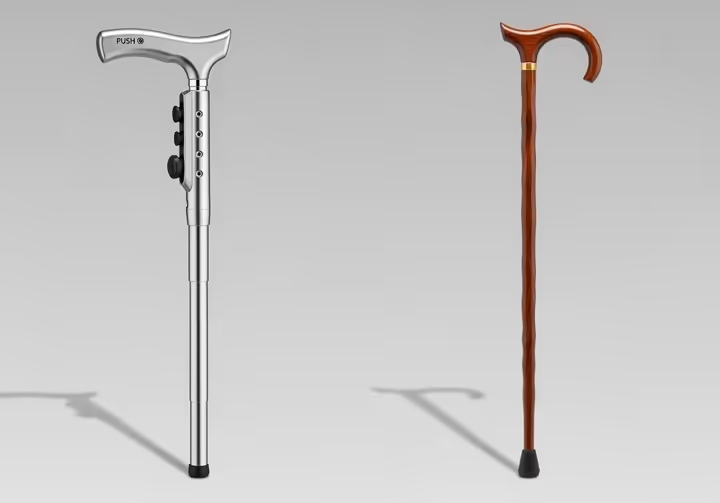
It also adapts to you. The perfect height for walking in slippers around the house is different from the height you need with sturdy outdoor shoes. An adjustable stick lets you tweak the length in seconds, so you always have the right support.
The Parts of a Walking Stick
A modern stick isn't just a stick. Each part does a specific job. Knowing the bits and pieces helps you pick one that feels like it was made for you.
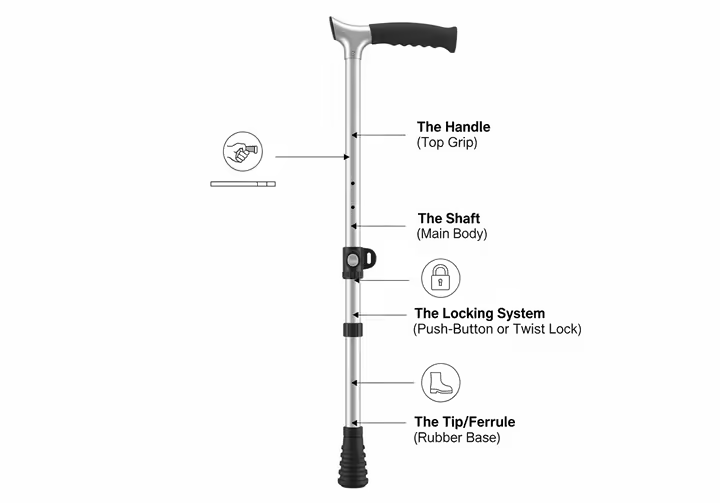
The Handle
This is where you connect with the stick. A classic T-handle is simple and lets you hook the stick over your arm. An ‘offset’ handle has a bend that centers your weight directly over the shaft, which is great for stability.
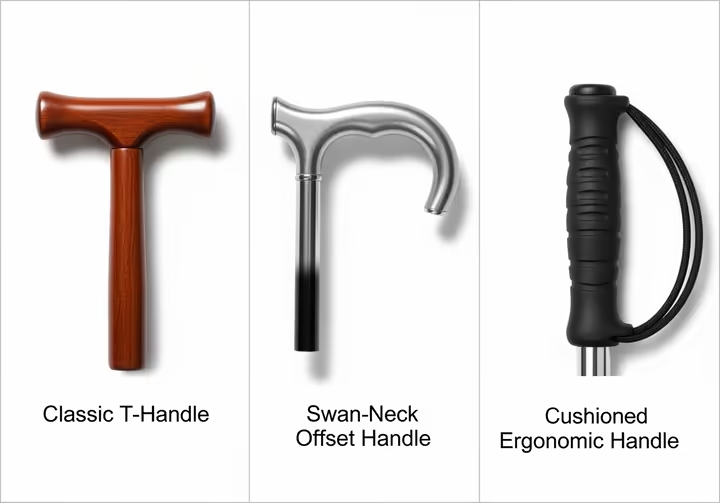
If you have arthritis or a weak grip, look for an ergonomic handle. They're molded to fit your hand, spreading the pressure out. You can also find soft gel-like grips that are extra comfy and absorb shock.
The Shaft
The main body of the stick is usually made of aluminum or carbon fiber. Aluminum is the standard, it’s strong, reliable, and not too expensive. If you put too much weight on it, it will bend before it snaps.
Carbon fiber is the high-tech option. It’s incredibly light, which means less fatigue for your arm and shoulder on long walks. The downside? It costs more and can be more brittle than aluminum if it gets a sharp knock from the side.
The Locking System
This is how an adjustable stick... adjusts. The most common is a push-button lock. A little button pops into a pre-set hole, it’s simple, and you can hear it click securely in place.
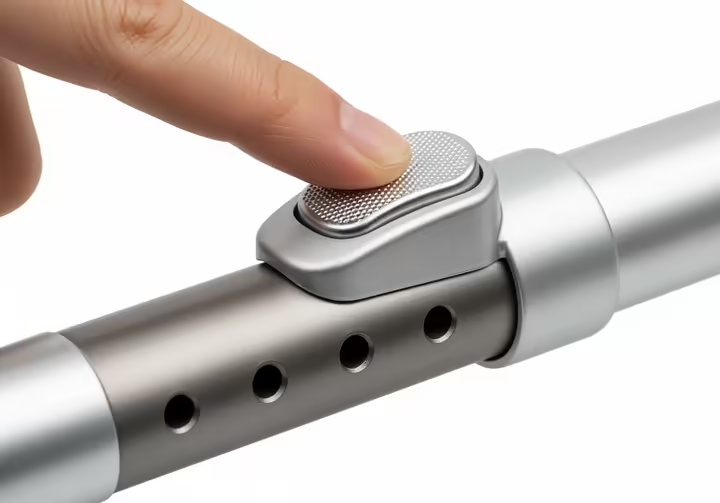
Some sticks use a twist lock, like you see on hiking poles. They offer more fine-tuning, but you need a strong grip to tighten them properly. If not tight enough, they can slip, so a push-button is often a safer, easier choice.
The Tip (Ferrule)
The rubber bit at the bottom is the ferrule. Think of it like the tire on a car, it provides all the grip. A standard single tip is fine for most flat surfaces like pavement or indoor floors.
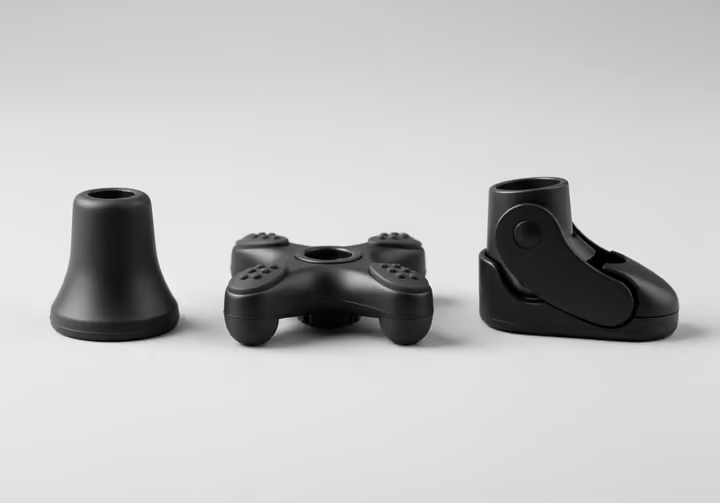
For extra stability, you can get a ‘quad’ base with four small feet. This lets the stick stand up on its own and is great if you have significant balance issues. You can also find pivoting tips that bend like an ankle, keeping more rubber on the ground on uneven terrain.
Extra Features
Foldable Sticks
Are those folding sticks safe? Yes, as long as you get a good one. They collapse into a few sections, perfect for stashing in a bag or the car. They're great for people who only need a stick sometimes, like when they get tired.
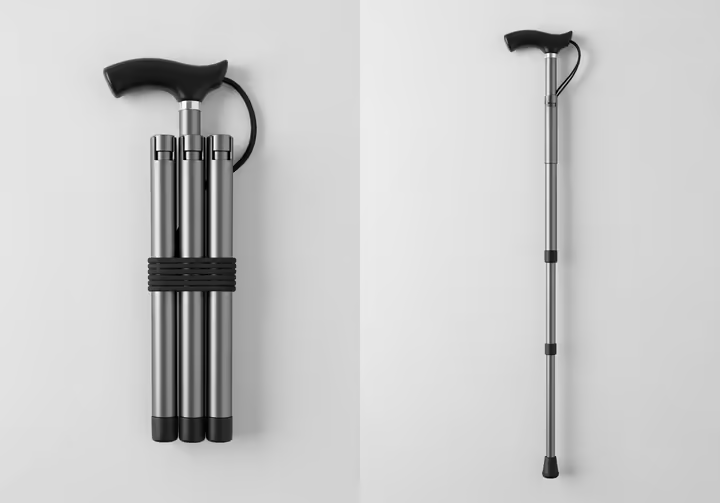
The key is to make sure all the sections click and lock together firmly before you put your weight on it. And just like any stick, make sure it’s rated for your body weight.
Taking it on a Plane
Can you bring it on an airplane? Absolutely. Walking sticks are considered medical devices, so you can take them in your carry-on or checked luggage. The only rule is that it can’t have a sharp metal spike on the end (which is rare for walking sticks anyway).
Getting the Right Height
Sizing your stick correctly is the most important step for safety and comfort. Luckily, it’s easy. Get a friend to help you with this.
First, put on the shoes you walk in most often. Stand up straight and let your arms hang naturally at your sides. Have your friend measure from the crease of your wrist down to the floor. That’s it, that’s your magic number.
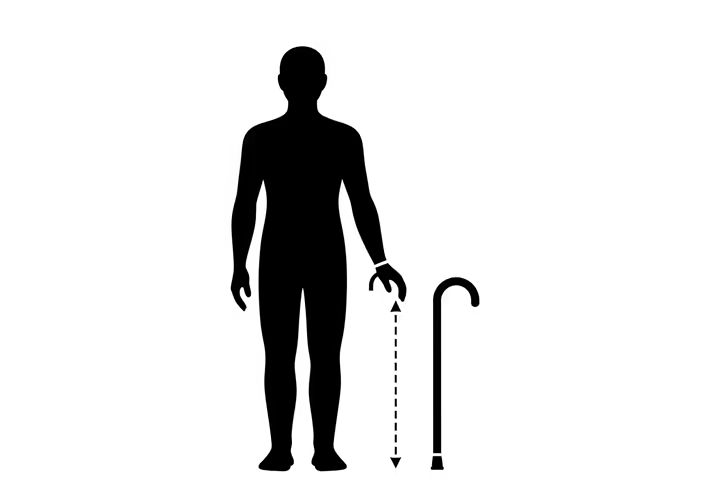
Set the stick to that height. When you hold the grip, your elbow should have a slight, comfortable bend (about 15-20 degrees). This is the perfect position for support without straining your shoulder or arm.
How to Use Your Stick
Basic Walking
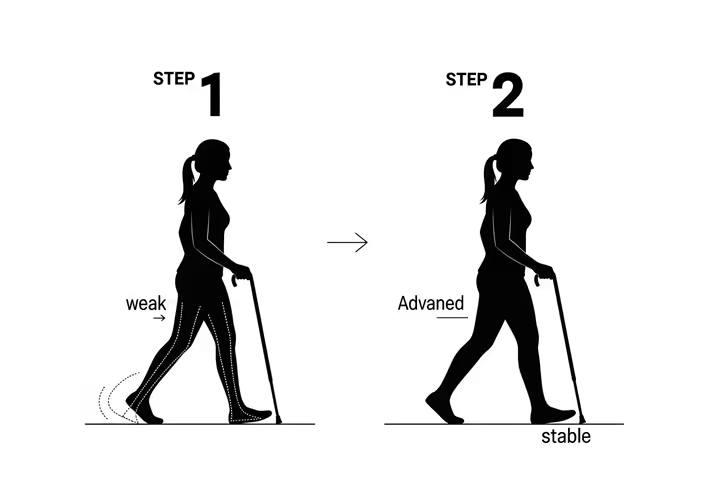
This might feel weird at first, but you should hold the stick on the opposite side of your weaker or painful leg. If your left knee hurts, hold the stick in your right hand. This mimics the natural way your arms and legs swing when you walk, giving you a wider, more stable base.
The rhythm is simple: move the stick forward at the same time as your weaker leg. Then, step through with your stronger leg. Stick-and-weak-leg together, then strong leg. You'll get the hang of it quickly.
Stairs and Curbs
There's an easy rhyme to remember for stairs: "up with the good, down with the bad." When going up, step with your strong ("good") leg first, then bring the stick and your weaker ("bad") leg up to the same step.
When going down, lead with the stick and your weaker leg first. Then, bring your stronger leg down to meet them. If there's a handrail, use it! The same logic applies to curbs.
Sitting and Standing
Never use your stick to pull yourself up out of a chair, it could easily slip. Instead, back up until you feel the chair on your legs. Set the stick aside, reach back, and use the chair's armrests to lower yourself down or push yourself up. Once you're standing and feel steady, then grab your stick.
A Quick Maintenance Check
Your stick is a safety tool, so it needs a quick look-over once in a while. The most important part is that rubber tip. If the tread is worn smooth, cracked, or uneven, replace it immediately. Replacement tips are cheap and easy to find.
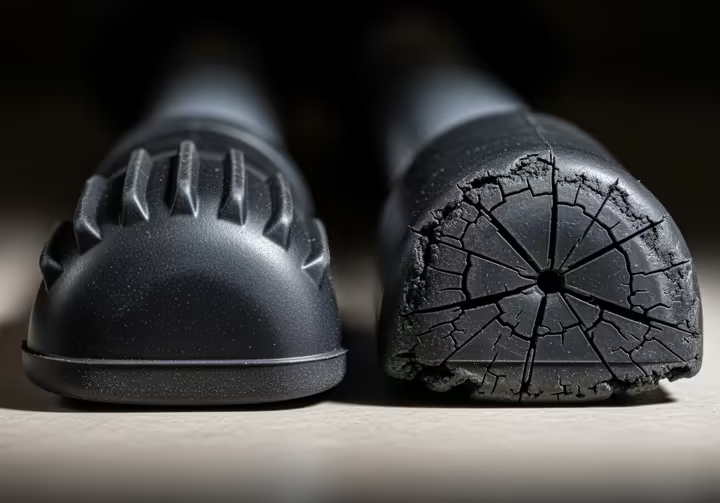
Just pull the old one off and shove the new one on. Also, give the handle and shaft a wipe now and then to keep it clean. Check that the locking mechanism is still tight and there are no wobbles. It only takes a minute.
```Works cited
- Why are the elderly reluctant to use rollator walkers?, https://www.skdmedical.com/news/why-are-the-elderly-reluctant-to-use-rollator-walkers
- What are the side effects of using a rollator walker for a long time ..., https://www.skdmedical.com/news/what-are-the-side-effects-of-using-a-rollator-walker-for-a-long-time
- Mind Over Matter: The Importance of Mental Health in Mobility for ..., https://mobilitycaring.com.au/mind-over-matter-the-importance-of-mental-health-in-mobility-for-seniors/
- The Benefits of Using a Rollator or Walker for Seniors with Limited Mobility - 1+1 Cares, https://1plus1cares.com/the-benefits-of-using-a-rollator-or-walker-for-seniors-with-limited-mobility/
- Exploring the Psychological Impact of Mobility Assistance Devices - Redman Power Chair, https://www.redmanpowerchair.com/exploring-the-psychological-impact-of-mobility-assistance-devices/
- A Guide To Walking Poles For Seniors - Physio Ed., https://physioed.com/health-advice/exercise-and-fitness/walking-poles-for-seniors/
- 4 Benefits of a Walking Stick, https://www.brazos-walking-sticks.com/blogs/blog/4-benefits-of-a-walking-stick
- Walking poles for seniors: how to choose the right ones, https://polewalkingaustralia.com.au/blog/walking-poles-for-seniors/
- Walking stick advantages and disadvantages, https://artwalkingsticks.com/blogs/blog/walking-stick-advantages-and-disadvantages
- The Benefits of Walking Sticks for Seniors - St. Andrew's, https://standrews1.com/blog/the-benefits-of-walking-sticks-for-seniors/
- Our Guide to Walking Stick Handle Types - Stick & Cane Shop, https://www.stickandcaneshop.co.uk/walking-stick-handle-types-guide
- Should elderly use walking sticks? - JSB Healthcare, https://jsbhealthcare.co.in/blogs/news/should-elderly-use-walking-sticks
- Walking Stick Handle Guide - WalkingSticks.co.uk, https://www.walkingsticks.co.uk/blog/walking-stick-handle-guide.html
- How To Use a Cane: Sizing, Safety, Training, Use & Stairs - Cleveland Clinic, https://my.clevelandclinic.org/health/procedures/how-to-use-a-cane
- Canes - Physiopedia, https://www.physio-pedia.com/Canes
- Ergonomic Cane Handle | Comfortable Anatomical Handles, https://www.alexorthopedic.com/ergonomic-cane-handle.html
- Ergonomic Walking Canes - Ergonomic Cane - Fashionable Canes, https://fashionablecanes.com/collections/ergonomic-handle-walking-canes
- Tips for choosing and using canes - Mayo Clinic, https://www.mayoclinic.org/healthy-lifestyle/healthy-aging/in-depth/canes/art-20548206
- Offset Handle Cane with Gel Grip - AvaCare Medical, https://www.avacaremedical.com/offset-handle-cane-with-gel-grip
- Offset Handle Canes with Gel Grip Handle - Advantage Medical, https://www.advantagemedical.com/products/offset-handle-canes-w-gel-grip-handle/
- Drive Adjustable Offset Cane with Gel Grip - Just Walkers, https://justwalkers.com/products/drive-adjustable-offset-cane-with-gel-grip
- Choosing Trekking Poles: Aluminum or Carbon Fiber – Cascade ..., https://cascademountaintech.com/blogs/news/which-is-better-aluminum-or-carbon-fiber-trekking-poles
- WALKING POLES FOR SENIORS | TSL Outdoor US, https://www.tsloutdoor.com/walking-poles-seniors
- How to choose the right material for your walking stick?, https://artwalkingsticks.com/blogs/blog/how-to-choose-the-right-material-for-your-walking-stick
- Trekking poles carbon or aluminum? » Test for beginners ..., https://alpinloacker.com/en/blogs/outdoor-guide-packing-lists-for-hiking-camping-more/trekking-poles-carbon-or-aluminum-test-for-beginners
- Carbon vs Aluminum: My Trekking Pole Dilemma - CS Instant Coffee, https://www.csinstant.coffee/blog/the-end-of-my-love-affair-with-carbon-fiber-trekking-poles
- How to Choose Trekking Poles - Treeline Review, https://www.treelinereview.com/howtochoose/trekking-poles
- Trekking poles: Everything you need to know about this useful accessory - Puma Adventures, https://pumaadventures.com/en/recommendations/trekking-sticks/
- A Quick Overview About Trekking Poles Design - Cnoc Outdoors, https://cnocoutdoors.com/blogs/blog/a-quick-overview-about-trekking-poles-design
- How bad actually are twist locks on trekking poles? : r/Ultralight - Reddit, https://www.reddit.com/r/Ultralight/comments/152ebb0/how_bad_actually_are_twist_locks_on_trekking_poles/
- What are the advantages of different locks for collapsible trekking poles?, https://outdoors.stackexchange.com/questions/13753/what-are-the-advantages-of-different-locks-for-collapsible-trekking-poles
- How to choose the right rubber tip for your walking cane | ART ..., https://artwalkingsticks.com/blogs/blog/how-to-choose-the-right-rubber-tip-for-your-walking-cane
- The Comprehensive Guide to Canes: Types, Tips & Style Explained, https://fashionablecanes.com/blogs/news/comprehensive-guide-canes
- The 10 Best Walking Canes for Elderly Women, https://www.medicalalertbuyersguide.org/articles/the-10-best-walking-canes-for-seniors/
- Blue Jay 360° Pivoting Cane Tip - Enhanced Stability Walking Cane Acce, https://specialtyfoodsource.com/products/blue-jay-360-pivoting-cane-tip-enhanced-stability-walking-cane-accessory
- Blue Jay 360 Degree Pivoting Cane Tip | Vitality Medical, https://www.vitalitymedical.com/blue-jay-360-degree-deluxe-pivoting-cane-tip.html
- Why is tip type an important consideration for canes? (Canes), https://answers.avacaremedical.com/5621045/Why-is-tip-type-an-important-consideration-for-canes
- Is It Safe To Use A Folding Cane - YouTube, https://www.youtube.com/watch?v=lqOucAjmjhA
- Are Folding Canes Safe? - WalkingCanes.com, https://walkingcanes.com/blogs/canes/are-folding-canes-safe
- Are Folding Canes Safe? - Michael Graves Design, https://michaelgravesdesign.com/blogs/blog/are-folding-canes-safe
- How to choose the right walking cane for seniors - MobileHelp, https://www.mobilehelp.com/blogs/your-safety/how-to-choose-the-right-walking-cane-for-seniors
- Common Issues: Maintenance Guide for Foldable Walking Canes - Medpoint, https://medpoint.ie/common-issues-maintenance-guide-for-foldable-walking-canes/
- All You Need to Know About Folding Cane Safety – Michael Graves ..., https://michaelgravesdesign.com/blogs/blog/all-you-need-to-know-about-folding-cane-safety
- Walking Sticks | Transportation Security Administration, https://www.tsa.gov/travel/security-screening/whatcanibring/items/walking-sticks
- Collapsible walking sticks - Rick Steves Travel Forum, https://community.ricksteves.com/travel-forum/switzerland/collapsible-walking-sticks
- Sizing, cutting & walking with a Cane, https://canescanada.com/Sizing-cutting-walking-with-a-Cane_ep_46-1.html
- How to Choose the Right Cane - Arthritis Foundation, https://www.arthritis.org/health-wellness/healthy-living/managing-pain/joint-protection/how-to-choose-the-right-cane
- How Tall Should Your Walking Stick Be? - WalkingSticks.co.uk, https://www.walkingsticks.co.uk/blog/how-tall-should-your-walking-stick-be.html
- How to Size & Measure a Walking Cane | Fashionable Canes, https://fashionablecanes.com/pages/cane-sizing
- Physiotherapy: How to use a cane, https://myhealth.alberta.ca/Health/Pages/conditions.aspx?hwid=custom.ab_physio_cane_inst
- How To Measure and Size A Walking Cane Correctly | Aleks Physio - YouTube, https://www.youtube.com/watch?v=znGTJps2N_M
- In Which Hand Should You Hold Your Cane? - Verywell Health, https://www.verywellhealth.com/which-hand-should-i-hold-a-cane-in-2549334
- How To Use Crutches, Canes, and Walkers - OrthoInfo - AAOS, https://orthoinfo.aaos.org/en/recovery/how-to-use-crutches-canes-and-walkers/
- How to Walk with a Cane Correctly - Ask Doctor Jo - YouTube, https://www.youtube.com/watch?v=sFMEmG6YKDI
- How To Walk With Cane - YouTube, https://www.youtube.com/watch?v=tw6183_zXas
- Using a Cane - Overview, https://www.cham.org/HealthwiseArticle.aspx?id=zt1156
- Using a Cane | Senior Health Services | Hartford HealthCare | CT, https://hhcseniorservices.org/health-wellness/health-resources/health-library/detail?id=zt1156&lang=en-us
- How to Use a Walking Cane on Stairs - Fashionable Canes, https://fashionablecanes.com/blogs/news/how-to-use-a-walking
- How to Use Cane on Stairs - YouTube, https://www.youtube.com/watch?v=cRgWJTpOJds
- www.myactivehealth.com, https://www.myactivehealth.com/hwcontent/content/special/zt1156.html#:~:text=Stand%20near%20the%20edge%20of,leg%20down%20to%20meet%20it.
- How to Stand and Sit with a Cane: Nursing Assistive Devices Skill Review - YouTube, https://www.youtube.com/watch?v=tLr9YdCzg6g&pp=0gcJCf8Ao7VqN5tD
- How To Sit To Stand with the aid of a Cane - YouTube, https://www.youtube.com/watch?v=uapMzce92HI
- Walking Stick Maintenance Tips – Flipstick UK, https://flipstick.co.uk/blogs/news/walking-stick-maintenance-tips
- How to Care for Your Walking Cane | Maintenance Tips for Style ..., https://www.canesgalore.com/blogs/news/how-to-care-for-a-walking-cane
- fashionablecanes.com, https://fashionablecanes.com/blogs/news/cane-tips#:~:text=Once%20you've%20chosen%20the,time%20to%20replace%20the%20tip.
- How to Replace your Cane Tip - YouTube, https://www.youtube.com/watch?v=tkV1_aPYH50&pp=0gcJCfwAo7VqN5tD
- PSA: Remember to replace your cane and crutch tips : r/ChronicIllness - Reddit, https://www.reddit.com/r/ChronicIllness/comments/14yyfma/psa_remember_to_replace_your_cane_and_crutch_tips/